














How UPVC Pipes Contribute to Sustainable Water Management
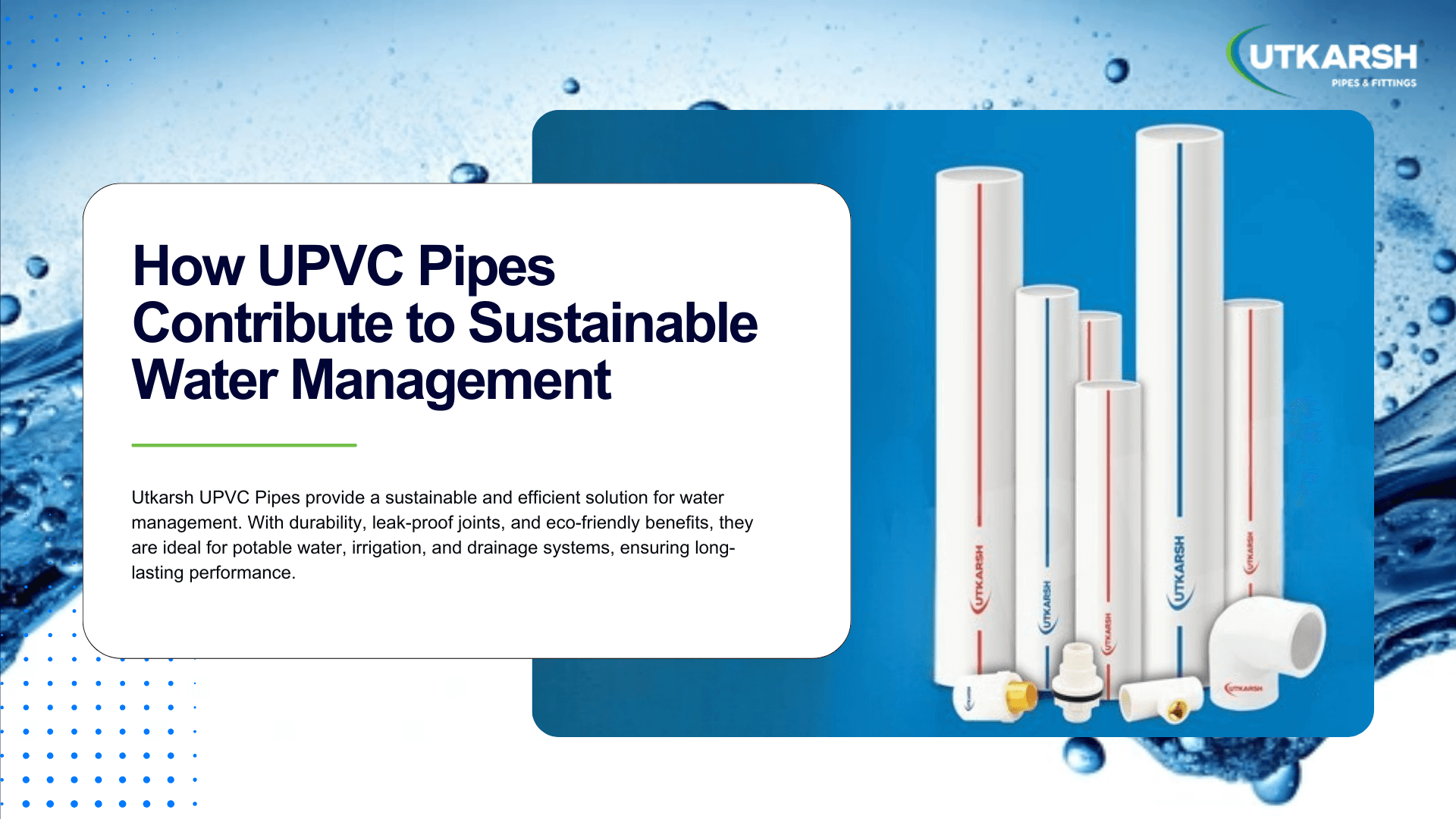
Water is one of the world's most valuable natural resources, and its efficient management is essential for supporting growing populations, industries, and agricultural activities. As governments and organizations focus on building sustainable infrastructure, the demand for reliable and environmentally responsible water distribution systems continues to rise.
Among the various piping solutions available today, UPVC pipes have emerged as a preferred choice for modern water management projects. Their durability, leak-proof performance, low maintenance requirements, and eco-friendly properties make them ideal for potable water supply, irrigation, drainage, and industrial applications.
Understanding UPVC Pipes and Their Importance
Unplasticized Polyvinyl Chloride (UPVC) pipes are manufactured without plasticizers, making them stronger, more rigid, and more durable than conventional PVC pipes. Their excellent resistance to corrosion, chemicals, and environmental factors makes them highly suitable for long-term water transportation systems.
Unlike traditional metal pipes that may rust or deteriorate over time, UPVC pipes maintain their structural integrity and water-carrying efficiency for decades. As a result, they play a crucial role in sustainable water management initiatives worldwide.
Why Sustainable Water Management Matters
Sustainable water management focuses on conserving water resources, minimizing wastage, improving distribution efficiency, and ensuring long-term availability of clean water.
An effective water management system should:
Reduce water loss through leakages
Minimize maintenance requirements
Ensure safe transportation of potable water
Lower energy consumption
Support environmental sustainability
UPVC piping systems help achieve these goals through their advanced material properties and long service life.
Key Benefits of UPVC Pipes for Sustainable Water Management
1. Exceptional Durability and Long Service Life
One of the primary advantages of UPVC pipes is their outstanding durability. These pipes are resistant to corrosion, scaling, rust, and chemical degradation, allowing them to perform efficiently for decades.
A well-installed UPVC piping system can have a service life of up to 50 years or more, significantly reducing replacement and maintenance requirements.
2. Reduced Water Loss Through Leak-Proof Performance
Water leakage is a major challenge in conventional water distribution systems. UPVC pipes provide excellent joint integrity and secure connections, helping minimize water loss during transportation.
This leak-proof performance improves overall water conservation and supports sustainable resource management.
3. Environmentally Friendly Solution
UPVC pipes contribute to environmental sustainability in several ways:
Lower energy consumption during manufacturing
Reduced transportation emissions due to lightweight construction
Long lifespan, reducing replacement frequency
Recyclable material composition
Lower maintenance-related resource consumption
These factors make UPVC pipes an environmentally responsible choice for water infrastructure projects.
4. Safe for Drinking Water Applications
Water quality is a critical consideration in potable water distribution systems. UPVC pipes are non-toxic and do not release harmful substances into the water supply.
Their smooth internal surfaces also help prevent bacterial growth and contamination, ensuring safe drinking water transportation.
5. Cost-Effective Installation and Maintenance
Compared to traditional piping materials, UPVC pipes are lightweight and easy to handle. This simplifies transportation, installation, and project execution.
Additionally, their resistance to corrosion and scaling significantly reduces maintenance costs throughout their lifecycle.
6. High Flow Efficiency
The smooth internal walls of UPVC pipes minimize friction losses and maintain efficient water flow. This improves hydraulic performance and can help reduce pumping energy requirements.
Also Read: Best Pipes for Plumbing: Why uPVC is a Preferred Option in India
Applications of UPVC Pipes in Water Management
Potable Water Supply Systems
UPVC pipes are extensively used in municipal, residential, and commercial water distribution networks. Their strength and hygienic properties make them ideal for delivering clean drinking water.
Agricultural Irrigation Systems
Efficient irrigation is essential for sustainable agriculture. UPVC pipes support uniform water distribution while minimizing losses, helping farmers optimize water usage and improve crop productivity.
Drainage and Sewage Networks
UPVC pipes are highly resistant to chemicals and wastewater, making them suitable for drainage and sewage management systems. Their durability ensures reliable long-term performance.
Industrial Water Management
Many industries rely on UPVC pipes for transporting water and process fluids. Their chemical resistance and corrosion-free nature make them a dependable solution for industrial applications.
Features of Utkarsh uFLO UPVC Pipes & Fittings
For organizations seeking reliable water management solutions, Utkarsh uFLO UPVC Pipes & Fittings offer several advanced benefits:
Low Thermal Conductivity
The low thermal conductivity of these pipes helps reduce heat transfer and energy loss, making them highly efficient for water transportation.
Solvent Weld Joining System
The solvent weld joining technology provides strong and durable joints, ensuring long-term system reliability.
Lead-Free and Non-Toxic
Utkarsh uFLO pipes are completely lead-free and non-toxic, making them suitable for safe drinking water applications.
UV and Weather Resistance
These pipes are designed to withstand prolonged exposure to sunlight and harsh weather conditions without compromising performance.
Chemical and Corrosion Resistance
Their excellent resistance to chemicals and corrosion ensures smooth water flow and extended service life.
Leak-Proof Connections
Secure joints help minimize water wastage and improve system efficiency.
High Pressure Resistance
These pipes are engineered to perform reliably in high-pressure water distribution systems.
Choosing Reliable UPVC Pipe Suppliers
The quality of a water distribution system depends heavily on the quality of the pipes and fittings used. Working with trusted upvc pipe fittings manufacturers like Utkarsh Pipes ensures access to certified products that deliver superior performance and durability.
Similarly, experienced pipe and fittings suppliers can provide technical guidance, product support, and a comprehensive range of solutions tailored to specific project requirements.
When selecting upvc pipes fittings, it is important to consider factors such as product quality, industry certifications, manufacturing standards, and supplier reputation.
Conclusion
Sustainable water management requires infrastructure solutions that are durable, efficient, and environmentally responsible. UPVC pipes have become a preferred choice because they offer exceptional durability, leak-proof performance, energy efficiency, and long-term cost savings.
Whether used for potable water supply, irrigation, drainage, or industrial applications, UPVC pipes contribute significantly to water conservation and sustainable development. By partnering with trusted upvc pipe fittings manufacturers and reliable pipe and fittings suppliers, organizations can build efficient water management systems that support both operational performance and environmental sustainability.
Frequently Asked Questions (FAQs)
1. What are UPVC pipes used for?
UPVC pipes are commonly used for potable water supply, agricultural irrigation, drainage systems, sewage networks, and industrial water transportation.
2. How do UPVC pipes support sustainable water management?
UPVC pipes reduce water leakage, improve flow efficiency, require minimal maintenance, and have a long lifespan, helping conserve water resources and reduce environmental impact.
3. Are UPVC pipes safe for drinking water?
Yes. UPVC pipes are non-toxic, lead-free, and resistant to bacterial growth, making them suitable for potable water applications.
4. What is the lifespan of UPVC pipes?
Under normal operating conditions, UPVC pipes can last 50 years or more, depending on installation quality and usage.
5. Why should I choose reputable upvc pipe fittings manufacturers?
Reliable manufacturers ensure consistent product quality, adherence to industry standards, better durability, and long-term system performance.
6. How do UPVC pipes compare to metal pipes?
Unlike metal pipes, UPVC pipes do not rust or corrode, are lighter in weight, easier to install, and require significantly less maintenance.
7. What should I consider when selecting pipe and fittings suppliers?
Look for suppliers with proven industry experience, quality certifications, comprehensive product offerings, strong technical support, and a reputation for reliability.