















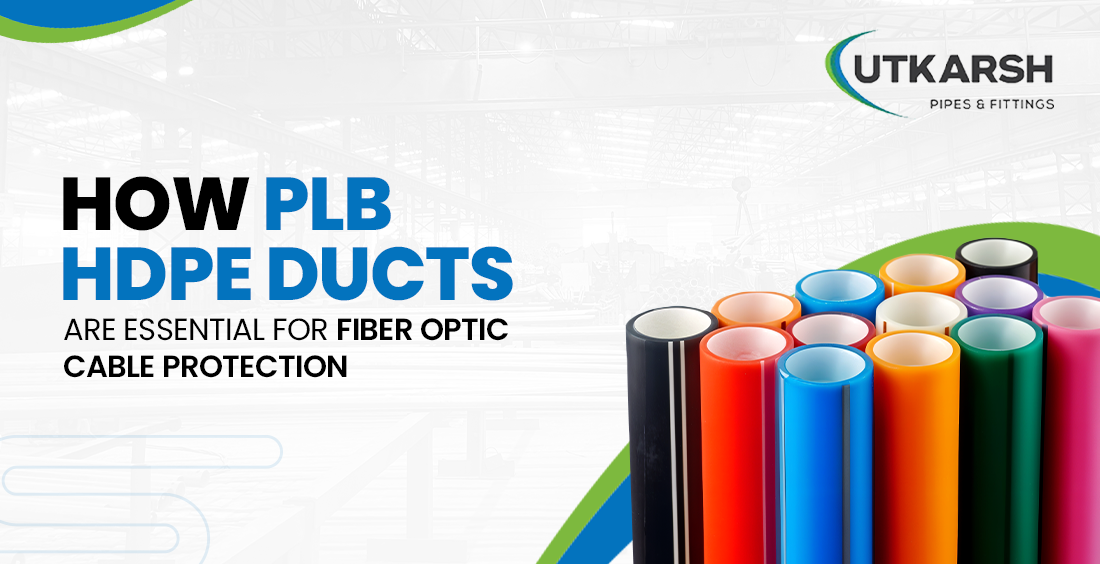
How PLB HDPE Ducts are Essential for Fiber Optic Cable Protection
In today’s digital era, reliable connectivity depends heavily on the strength and stability of communication networks. Fiber optic cables form the backbone of modern data transmission, supporting everything from online transactions to high-definition video calls and cloud-based services.
However, fiber optic cables are delicate and can easily be damaged by external pressure, environmental exposure, or long-term wear and tear. This is where PLB HDPE ducts play a crucial role. Acting as a protective barrier, these ducts shield fiber optic cables from damage and help maintain uninterrupted network performance.
Among various cable protection solutions, PLB duct pipes stand out due to their durability, flexibility, and long service life, making them a preferred choice for telecom and infrastructure projects.
What are PLB HDPE Ducts?
PLB stands for Permanently Lubricated, while HDPE refers to High-Density Polyethylene. A PLB duct pipe is specifically designed to protect fiber optic and copper cables during installation and throughout their operational life.
These ducts feature a dual-layer construction that enhances durability and ensures smoother cable installation.
Outer Layer: Made from high-quality, UV-resistant HDPE material, providing protection against mechanical damage, sunlight, chemicals, and environmental stress.
Inner Layer: Coated with a permanent silicone-based lubricant that reduces friction, allowing cables to be pulled easily across long distances.
Because of these advantages, PLB ducts are widely used in telecom networks, underground cabling projects, and smart infrastructure systems.
Why PLB HDPE Ducts are Essential for Fiber Optic Cable Protection
1. Superior Mechanical Protection
Fiber optic cables are sensitive to external pressure and physical impact. Construction activities, soil movement, and heavy traffic can damage exposed cables.
A high-quality PLB duct pipe provides a strong protective layer that shields the cables from crushing, bending, or stretching, ensuring long-term operational safety.
Tip: Always choose ducts made from virgin HDPE material to ensure maximum strength and durability.
2. UV and Weather Resistance
Fiber optic infrastructure often needs to withstand extreme outdoor conditions. Continuous exposure to sunlight, rain, and temperature variations can degrade ordinary plastic materials.
The UV-stabilized outer layer of PLB ducts prevents deterioration caused by sunlight, making them ideal for outdoor, underground, and aerial installations.
Working with a reliable PLB HDPE ducts manufacturer ensures the ducts meet industry-grade UV resistance standards.
3. Smooth and Easy Cable Installation
Cable installation across long routes can be challenging due to friction inside the duct.
The silicone-lubricated inner layer of PLB ducts reduces the internal coefficient of friction (ICF), enabling cables to slide smoothly through the pipe. This helps reduce installation time, labor costs, and the risk of cable damage during pulling.
As a result, telecom contractors prefer PLB ducts for large-scale network deployments.
4. Chemical and Corrosion Resistance
Underground environments may contain chemicals, moisture, or corrosive elements that can damage standard materials over time.
HDPE is chemically inert, meaning it resists acids, alkalis, and other corrosive substances commonly found in soil or industrial zones. This ensures that the PLB duct pipe remains durable and reliable even in challenging environments.
5. Flexible Yet Strong Design
Telecom cable routes often require ducts to navigate bends, curves, and uneven terrain.
PLB HDPE ducts offer excellent flexibility without compromising structural strength. Their lightweight design also makes transportation, handling, and installation easier for contractors.
When selecting ducts, always confirm the bending radius and flexibility specifications from the PLB duct pipe manufacturer to ensure compatibility with your project requirements.
Smart Buyer’s Checklist: Choosing the Right PLB HDPE Ducts
Before purchasing PLB ducts for your project, consider the following factors:
Diameter and Length
Larger duct diameters allow easier pulling of multiple cables and future network expansion.Internal Coefficient of Friction (ICF)
Lower ICF values ensure smoother cable installation.Compliance Standards
Always ensure the ducts comply with global telecom and TEC standards for quality and safety.PLB HDPE Ducts Price
Prices may vary depending on thickness, diameter, and customization options. Comparing products from a trusted PLB HDPE ducts manufacturer can help you find the best balance between quality and cost.
Why Choose Utkarsh Pipes and Fittings?
Selecting a trusted PLB duct pipe manufacturer is essential for ensuring long-term network reliability.
Utkarsh Pipes and Fittings is one of India’s leading manufacturers of infrastructure piping solutions. The company produces high-quality PLB HDPE ducts using virgin, UV-grade HDPE material to ensure maximum performance and durability.
Utkarsh ducts feature a two-layer construction:
The outer HDPE layer provides superior resistance against mechanical stress, UV exposure, and chemicals.
The inner permanently lubricated layer reduces friction and enables smooth cable installation.
All products comply with global telecom and TEC standards, making them suitable for large-scale fiber optic and copper cable projects.
Additionally, the PLB HDPE ducts price offered by Utkarsh remains competitive, allowing infrastructure developers to access premium-quality products without exceeding project budgets.
Also Read: How PLB Duct Pipe Manufacturers Support Modern Telecom and Data Networks
Conclusion
Protecting fiber optic cables is critical for maintaining uninterrupted communication networks. Investing in a high-quality PLB duct pipe ensures that cables remain protected from mechanical damage, environmental exposure, and chemical corrosion.
By partnering with a trusted PLB HDPE ducts manufacturer, such as Utkarsh Pipes and Fittings, telecom operators and infrastructure developers can build reliable and long-lasting network systems.
With strong durability, smooth installation features, and cost-effective solutions, PLB HDPE ducts remain one of the most dependable options for fiber optic cable protection.
FAQs
What is the best way to protect fiber optic cables?
The most effective way to protect fiber optic cables is by using PLB HDPE ducts or a fiber optic cable protection tube. These ducts safeguard cables from physical damage, environmental exposure, and mechanical stress.
What can damage fiber optic cables?
Fiber optic cables may be damaged by excessive bending, physical impact, moisture infiltration, rodent attacks, UV exposure, or chemical corrosion.
Does fiber optic cable require surge protection?
Fiber optic cables themselves do not conduct electricity, so they typically do not require surge protection. However, the connected equipment such as network switches, media converters, and transceivers should be protected from power surges.