













How Low Quality HDPE Pipes & Fittings are Impacting Water Supply Projects
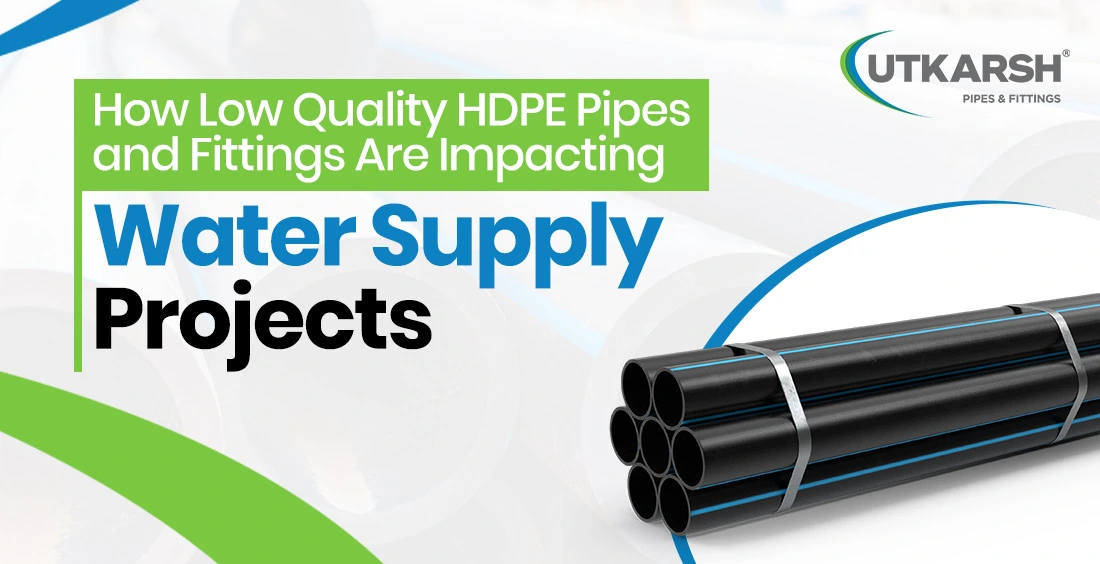
High-Density Polyethylene (HDPE) piping systems have become an essential part of modern infrastructure across water supply, industrial processing, agriculture, and sewage management. Known for their strength, flexibility, and long service life, HDPE systems perform reliably even in demanding environments.
However, in case of low quality hdpe pipes & fittings it is quietly weakening water distribution networks across projects. What appears cost-effective at procurement often becomes expensive in operation. This article examines how inferior materials are affecting water supply projects and why quality makes the difference.
Understanding HDPE Piping Systems
HDPE piping systems consist of pipes and fittings manufactured from high-density polyethylene, a thermoplastic polymer valued for its excellent mechanical strength and resistance to corrosion, chemicals, and environmental stress cracking. These systems are widely used in applications such as potable water distribution, industrial fluid transfer, gas pipelines, wastewater management, and agricultural irrigation.
HDPE piping systems are lightweight, easy to install, and capable of withstanding both internal pressure and external loads. When paired with high-quality fittings, they deliver a seamless and long-lasting pipeline solution.
The Rising Popularity of HDPE Piping Systems
High-Density Polyethylene (HDPE) has become a preferred choice for water transmission:
Corrosion resistance
Flexibility and high impact strength
Joint integrity through heat fusion
Abrasion resistance HDPE fittings
What Defines Quality in HDPE Pipes & Fittings?
Good quality HDPE systems are engineered to:
Withstand high internal pressures
Resist abrasion, UV exposure, and chemical attack
Provide secure joints
Maintain longevity under load cycling
Components like HDPE pipe fittings, especially abrasion-resistant variants, play a vital role in:
Maintaining hydraulic efficiency
Preventing premature wear
Supporting complex installations
Low quality alternatives cut corners in raw material, manufacturing, and testing—leading to unreliable performance.
How Low Quality HDPE Products Impact Water Supply Projects
a. Increased Leakage and Pipeline Failures
Inferior HDPE pipes & fittings often have:
Poor dimensional accuracy
Weaker joint integrity
Reduced resistance to pressure fluctuations
This results in:
Frequent leaks
Pipe bursts
Service interruptions
Each failure not only disrupts water delivery but also increases operational expenses due to emergency repairs.
b. Higher Maintenance and Replacement Costs
Substandard HDPE fittings fail prematurely due to:
Poor heat fusion properties
Low abrasion resistance
Impurities in material grade
This leads to early system failures and repeated replacements driving up lifecycle costs.
c. Compromised Water Quality
Inadequate materials may:
React with transported fluids
Degrade faster under environmental stress
Allow contamination through micro-cracks
This is especially dangerous for drinking water pipelines, where water quality must be maintained from source to tap.
d. Project Delays and Budget Overruns
Project planning often assumes:
Material lasts design life
Installation is smooth
Maintenance minimal
However, using low quality HDPE piping systems results in:
Construction delays
Budget overruns
Unplanned mobilization of repair crews
Such setbacks derail scheduled project completion and erode stakeholder confidence.
Also Read: The Growing Role of HDPE Pipes in Subsea Applications
Utkarsh HDPE Pipes & Fittings – Built for Performance
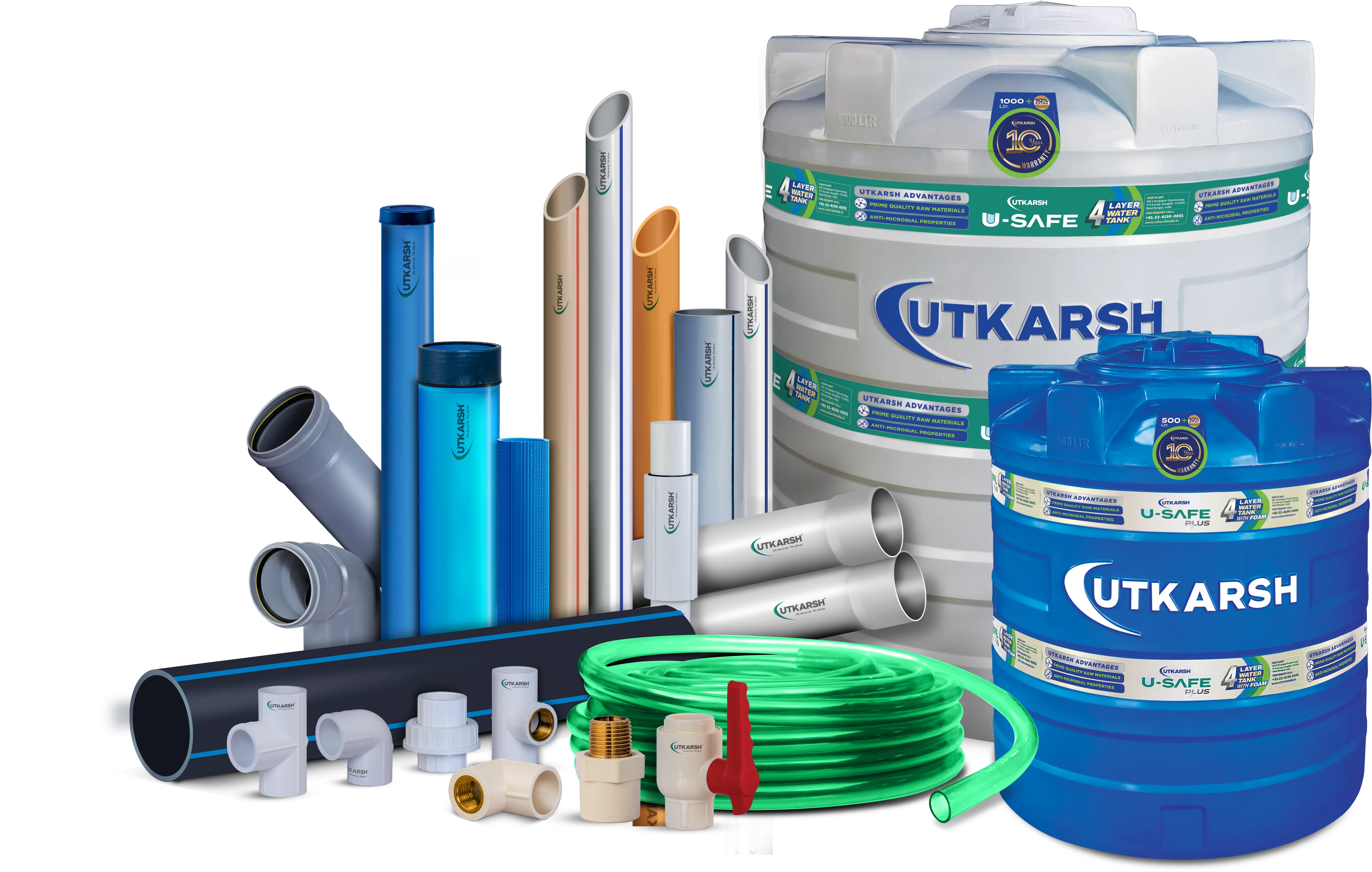
Utkarsh Pipes and Fittings offers a comprehensive range of HDPE pipes and fittings, engineered to withstand high-pressure HDPE pipes applications while meeting the demanding needs of modern infrastructure projects.
HDPE Pipes:
Available in sizes ranging from 20 mm to 315 mm
Manufactured using PE 63, PE 80, and PE 100 grades
Excellent resistance to abrasion, corrosion, and chemical attack
Smooth internal bore for efficient fluid flow
Designed for long service life in both underground and above-ground installations
HDPE Pipe Fittings:
Engineered for high abrasion resistance
Leak-free and mechanically strong joint performance
Compatible with complete HDPE piping systems
Suitable for high-pressure and heavy-duty applications
Utkarsh HDPE piping systems are manufactured under strict quality control processes, ensuring consistent performance, safety, and reliability.
Conclusion
Water supply projects depend on the integrity of every component from pipes to fittings. Using low quality HDPE pipes & fittings doesn’t just cut corners, it compromises project success, increases costs, and degrades performance.
For projects that demand long-term performance and minimal lifecycle cost, choosing trusted brands with engineered HDPE solutions like Utkarsh is the smart investment.
Frequently Asked Questions
Q1. What problems arise from using low quality HDPE pipes?
Substandard HDPE pipes may fail under pressure, leak, cause service disruptions, and require frequent repairs.
Q2. Why are abrasion resistant HDPE fittings important?
They resist wear in high velocity or mechanically stressed environments, improving lifespan and reducing maintenance.
Q3. How can I identify quality HDPE pipe fittings?
Look for certified materials, accurate dimensions, high pressure ratings, and manufacturing quality standards.
4. Can HDPE pipes & fittings handle corrosive fluids?
HDPE materials offer excellent resistance to corrosion and many chemicals, making them suitable for a wide range of fluid transport applications.