














The Role of SCGR in Enhancing the Long-Term Reliability of HDPE Pipes
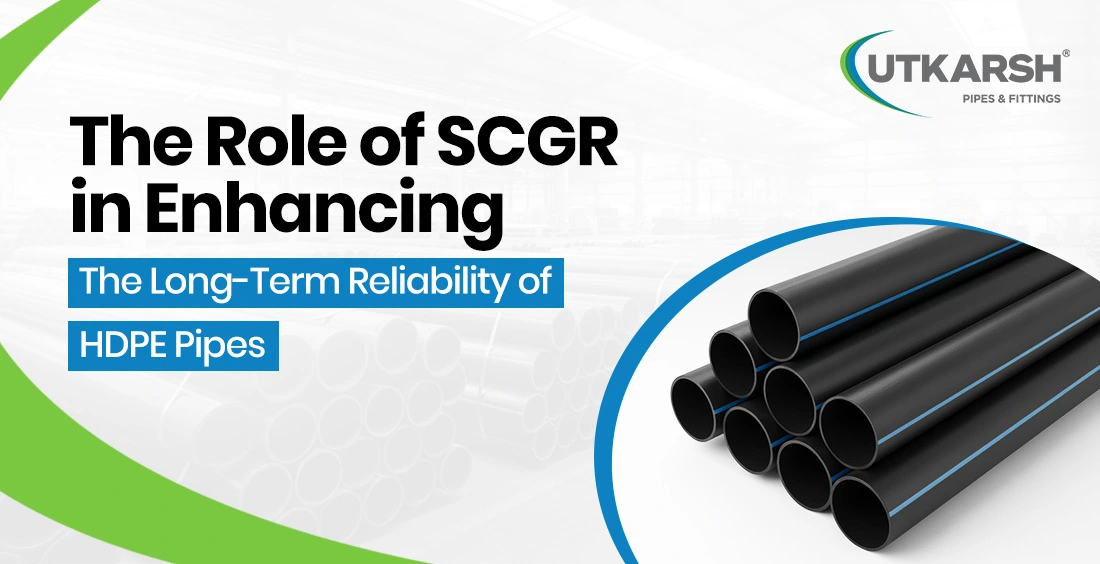
High-Density Polyethylene (HDPE) pipes have become a cornerstone in modern infrastructure due to their unmatched durability, flexibility, and corrosion resistance. As one of the leading hdpe pipe manufacturers in Kolkata, Utkarsh Pipes and Fittings delivers piping systems that are engineered to perform reliably for decades across a wide range of applications - from water supply and irrigation to industrial and municipal networks. A key factor that significantly contributes to this long-term reliability is SCGR - Slow Crack Growth Resistance.
What is SCGR and Why It Matters?
Slow Crack Growth Resistance (SCGR) refers to a material’s ability to resist the gradual formation and propagation of cracks under long-term stress conditions. In polyethylene materials like HDPE, tiny flaws or stress concentrators - such as scratches, imperfections, or localised tensile stresses - can evolve into slow-growing cracks if the material lacks adequate resistance. Left unchecked, these cracks can eventually compromise the structural integrity of the pipe long before its intended service life ends.
SCGR is an intrinsic material property that directly influences long-term performance metrics, particularly in pressurised or buried applications where sustained stresses and environmental factors come into play.
How SCGR Enhances HDPE Pipe Durability
1. Minimises Crack Initiation and Propagation
Even small surface defects or stresses can act as starting points for crack growth. A high SCGR rating means the HDPE resin used in pipes resists that growth, slowing down the crack propagation process and significantly lowering the risk of premature failure under load or pressure.
2. Supports Long Service Life (50+ Years)
Thanks to superior SCGR properties combined with corrosion, abrasion, and chemical resistance, Utkarsh HDPE pipes are engineered for lifespans ranging from 50 to 100 years, far exceeding many traditional materials like steel or concrete.
3. Improves Pipeline Reliability Under Pressure
In real-world service conditions, such as municipal water distribution or industrial fluid transfer pipes encounter sustained hoop stresses. Strong SCGR performance ensures that such ongoing stresses do not develop into catastrophic brittle failures over time.
4. Reduced Maintenance and Lifecycle Costs
Systems with higher SCGR resist slow crack growth, meaning fewer repairs, reduced downtime, and lower lifecycle costs for operators and end users. This translates to exceptional return on investment, especially for large-scale infrastructure.
Also Read: How HDPE Pipes are Designed to Withstand High-Pressure Applications
SCGR in Utkarsh HDPE Pipes and Fittings
At Utkarsh Pipes and Fittings, our HDPE pipes are designed and manufactured with stringent quality and testing standards, ensuring excellent SCGR alongside other performance-enhancing features:
Superior corrosion and abrasion resistance
Smooth internal bore for optimal flow and reduced friction loss
Leak-free fittings with high mechanical strength
Conformance to BIS and other global quality certifications
Lightweight and flexible for easier handling and installation
These properties anchored by outstanding SCGR values, make our HDPE systems highly suitable for demanding sectors like water distribution, agricultural irrigation, industrial fluid systems, marine and sewage applications.
Conclusion
SCGR isn’t just a technical specification—it’s a critical factor that defines the durability, safety, and life expectancy of HDPE pipelines. For engineers, project planners, and buyers seeking reliable piping solutions, choosing HDPE pipes with superior SCGR—like those from Utkarsh Pipes and Fittings—means investing in infrastructure that performs efficiently for decades. Along with long-term strength and crack resistance, these advanced piping solutions also contribute to sustainable development by offering significant environmental advantages of hdpe pipes through leak prevention, recyclability, and reduced maintenance requirements.
Frequently Asked Questions:
Q1. What does SCGR mean in HDPE pipes?
SCGR stands for Slow Crack Growth Resistance, which measures how well the HDPE material resists the gradual formation and propagation of cracks under sustained stress — a key determinant of long-term pipe reliability.
Q2. Why is SCGR important for HDPE pipe durability?
High SCGR helps prevent premature structural failures due to long-term stresses and environmental factors, thereby ensuring the HDPE pipe system remains functional for its intended service life.
Q3. How long can HDPE pipes last with superior SCGR?
With excellent SCGR and other protective properties, HDPE pipes from Utkarsh can expect service lives of 50 to 100 years under normal operating conditions.
Q4. Do all HDPE pipes have the same SCGR performance?
SCGR can vary based on resin grade, manufacturing process, and quality control standards. Choosing pipes from reputable manufacturers ensures higher SCGR and better reliability.
Q5. Are HDPE pipes safe for potable water?
Yes, Utkarsh HDPE pipes are non-carcinogenic and safe for drinking water systems, complying with relevant BIS standards.