













Manufacturing Processes That Ensure Strength in uPVC Pipes and Fittings

In modern plumbing, agriculture, and infrastructure systems, pipes are expected to perform reliably for decades. The real strength of any piping system, however, lies not just in the material - but in how it is manufactured.
Substandard manufacturing practices often result in pipes that crack under pressure, degrade due to chemicals, or fail prematurely at joints. These failures lead to water loss, safety risks, and costly maintenance.
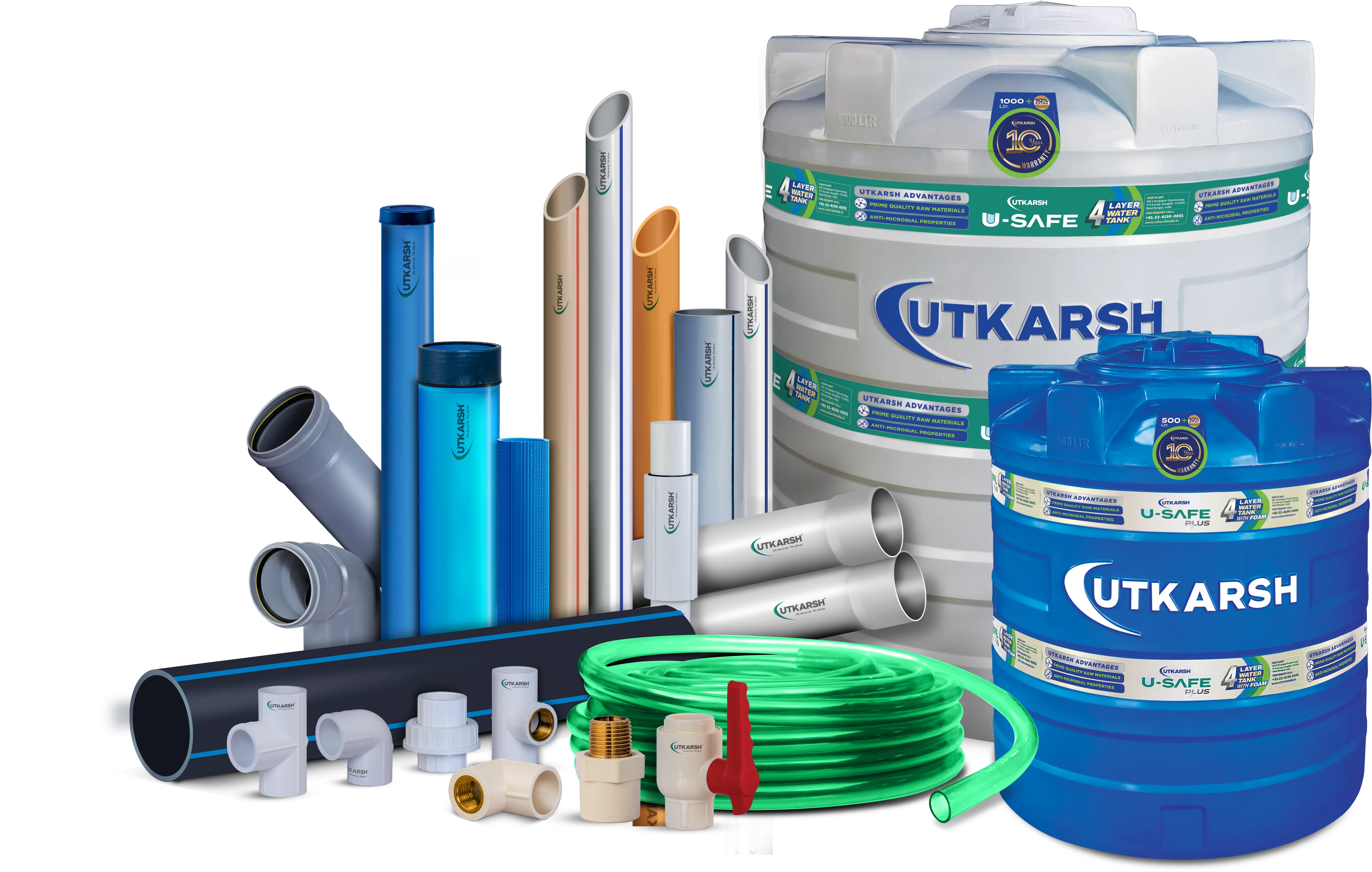
Utkarsh Pipes & Fittings, a trusted upvc pipe manufacturer, addresses these challenges through advanced manufacturing processes that ensure superior strength, dimensional accuracy, and long-term durability. Also this article explain why Utkarsh’s products stand out for durability and performance.
Understanding uPVC Pipes and Fittings
uPVC (Unplasticized Polyvinyl Chloride) is a rigid form of PVC that contains no plasticizers, making it stronger, more dimensionally stable, and highly resistant to environmental impacts compared with plasticized alternatives.
uPVC pipes and fittings are widely used in residential, agricultural, and industrial applications due to their rigidity, corrosion resistance, and long service life. Unlike conventional metal pipes, uPVC does not rust, scale, or chemically react with most fluids. Adhering to proper uPVC pipe safety standards ensures these piping systems meet required regulations and certifications for safe and reliable performance across various applications.
uPVC Pipes Manufacturing Process at Utkarsh Pipes
Utkarsh Pipes & Fittings follows a precision-driven, automated manufacturing system to ensure consistency, strength, and quality at every stage.
1. Raw Material Selection and Mixing
High-grade, lead-free uPVC resin is blended with stabilizers, lubricants, and modifiers using automated high-speed mixers. This ensures uniform dispersion of additives, which directly impacts pipe strength and longevity.
2. Controlled Material Feeding
The blended compound is fed into advanced extruders through calibrated feeding systems. Accurate dosing maintains material consistency and prevents defects during pipe formation.
3. Melting and Homogenization
Within the extruder, the material is heated and plasticized at controlled temperatures. The screw mechanism ensures complete homogenization, which is essential for achieving uniform density and mechanical strength.
4. Extrusion and Pipe Shaping
The molten compound is passed through precision dies to form pipes of exact diameters and wall thicknesses. For uPVC pipe fittings manufacturing, high-accuracy moulds are used to create elbows, tees, couplers, and other components with excellent joint integrity.
5. Calibration and Cooling
Vacuum calibration ensures dimensional accuracy, while controlled cooling locks the molecular structure in place. This step is critical for achieving pressure resistance and long-term stability.
6. Cutting, Socketing, and Finishing
Pipes are cut to standard lengths, socketed where required, and surface-finished for easy installation and secure connections.
7. Quality Inspection and Testing
Each batch undergoes rigorous quality checks, including dimensional accuracy, pressure testing, and visual inspection. Only pipes that meet strict internal and industry standards proceed to dispatch.
How Manufacturing Ensures uPVC Pipe Durability
The durability of uPVC pipes and fittings is a direct result of:
Precise raw material formulation
Uniform extrusion and controlled cooling
Accurate with all thickness and joint design
Resistance to corrosion, chemicals, and scaling
Consistent quality checks throughout production
These factors ensure long service life, minimal maintenance, and reliable performance in demanding environments.
Also Read: How uPVC Pipes Improve Plumbing Efficiency and Longevity
Standards and Certifications of uPVC Pipes and Fittings
uPVC pipes and fittings are manufactured in strict compliance with international quality standards to ensure safety, durability, and reliable performance across applications. The uPVC pipes are available in push-fit sizes ranging from 20 mm to 50 mm and are produced as per ASTM D 1785, conforming to Schedule 40 and Schedule 80, which defines their pressure rating, wall thickness, and dimensional accuracy.
Complementing these pipes, uPVC fittings are offered in both threaded and push-fit configurations, also in sizes from 20 mm to 50 mm, and are manufactured in accordance with ASTM D 2467 Schedule 80 standards. These certifications ensure excellent mechanical strength, precise fitment, chemical resistance, and long service life, making uPVC piping systems suitable for residential, commercial, and industrial applications.
Conclusion
Utkarsh Pipes & Fittings brings together more than five decades of experience, deep technical expertise, strong manufacturing authority, and unwavering trust to deliver high-performance uPVC piping solutions. Every stage of the manufacturing process - right from raw material selection to final quality inspection - is designed to enhance strength, durability, and reliability.
With state-of-the-art facilities, automated extrusion lines, and strict quality protocols, Utkarsh Pipes and Fittings ensures that its uPVC pipes and fittings consistently meet the demands of modern infrastructure, residential construction, agriculture, and industrial systems. The company’s commitment to engineering excellence and compliance with industry standards makes Utkarsh Pipes a dependable partner for long-lasting piping solutions.
Choosing Utkarsh Pipes & Fittings means investing in products that are not only manufactured with precision but also backed by a legacy of trust, innovation, and performance.
Frequently Asked Questions
1. What makes uPVC pipe manufacturing different from other plastics?
uPVC is rigid (unplasticized), offering higher mechanical strength and chemical resistance than plasticized PVC used in flexible applications.
2. How does Utkarsh Pipes ensure the strength of its uPVC pipes?
Through SCADA-controlled mixing, precision extrusion, vacuum calibration, water cooling, and multi-stage quality inspections.
3. Are uPVC pipes and fittings suitable for residential plumbing?
Yes, uPVC pipes are widely used for potable water supply, drainage, and plumbing due to their hygienic and non-reactive properties.
4. What role does quality testing play in pipe performance?
Multi-stage testing ensures dimensional accuracy, pressure resistance, and structural integrity, reducing the risk of failures.