















What is CPVC Pipe Used For?
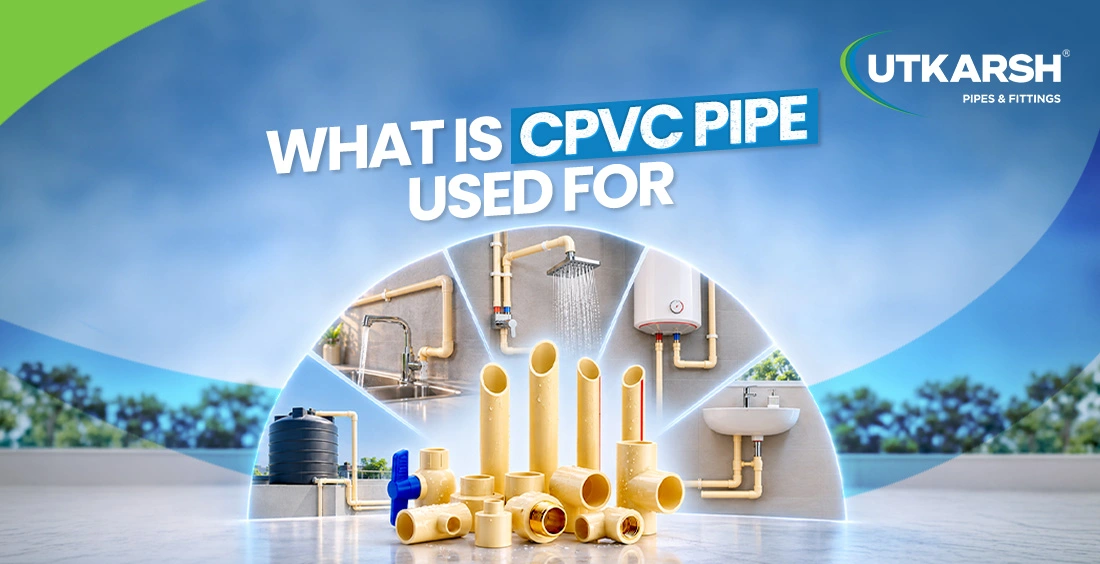
CPVC (Chlorinated Polyvinyl Chloride) pipe is made by chlorinating PVC resin. This extra chlorine gives it one big advantage over regular PVC and uPVC: it can safely carry hot water as well as cold.
That is why CPVC pipe uses today range from bathroom plumbing in homes to hot water systems in hotels, hospitals and industries. Here is where CPVC pipes work best and why.
Need CPVC pipes for hot and cold water lines? See Utkarsh CPVC pipe sizes and get a quote →
CPVC Pipe Temperature Rating
The CPVC pipe temperature rating is up to 93°C (200°F). Standard PVC, in comparison, begins to soften at around 60°C (140°F). This higher heat tolerance makes CPVC the preferred choice wherever hot water flows.
Common CPVC Pipe Uses
1. Drinking Water Supply
Is CPVC pipe safe for drinking water? Yes. CPVC pipes made to IS 15778 are specifically designed for potable hot and cold water supply. They do not rust, corrode or leach metals into the water, and their smooth inner surface resists scaling and bacterial growth.
2. CPVC Pipes for Bathroom Plumbing
CPVC pipes for bathroom plumbing carry both hot and cold water to showers, mixers, wash basins and taps. They are widely used for concealed lines inside walls, since they do not corrode or develop pinhole leaks over time.
Note that CPVC is meant for water supply lines. For toilet and waste water drainage, SWR pipes are the right choice.
3. CPVC Pipe for Geyser Connection
A CPVC pipe for geyser connection carries hot water from the geyser outlet to bathroom and kitchen taps. Since most geysers deliver water well below 93°C, CPVC handles this comfortably. Use brass-threaded CPVC adapters at the geyser inlet and outlet for a secure joint.
4. CPVC Pipe for Solar Water Heater
A CPVC pipe for solar water heater lines is a popular choice for carrying hot water from rooftop tanks to the house. However, water near the collector can get extremely hot on sunny days with no usage. For this reason, a short metal section is often used right at the heater outlet, with CPVC used for the rest of the line.
5. Kitchens, Apartments and Commercial Buildings
High-rise apartments, hotels, hospitals and offices use CPVC for central hot and cold water distribution because it is lightweight, durable and easy to work with on large projects.
6. Industrial Applications
CPVC's resistance to acids, alkalis and salts makes it useful for industrial hot water lines and certain chemical process applications.
Advantages of CPVC Pipes
The key advantages of CPVC pipes include:
- Hot and cold water use: Handles temperatures up to 93°C.
- Corrosion-free: No rust, scaling or pinhole leaks.
- Hygienic: Safe for potable water and resistant to bacterial growth.
- Heat retention: Low thermal conductivity reduces heat loss in hot water lines.
- Easy jointing: Solvent cement joints need no electricity or welding.
- Long service life: Maintains its pressure-bearing ability for 50 years or more.
Choose Reliable CPVC Pipe Manufacturers
CPVC performs best when it comes from trusted CPVC pipe manufacturers that follow BIS standards. Utkarsh Pipes and Fittings, the polymer division of Utkarsh India Limited, brings 50+ years of experience and a manufacturing capacity of 68,000 MT per annum. Explore Utkarsh CPVC pipes and fittings for reliable hot and cold water plumbing.
FAQs
1. What are the main CPVC pipe uses?
CPVC pipe uses include hot and cold drinking water supply, bathroom and kitchen plumbing, geyser and solar water heater lines, central water distribution in apartments, hotels and hospitals, and industrial hot water lines.
2. Is CPVC pipe safe for drinking water?
Yes, CPVC pipe is safe for drinking water. Pipes made to IS 15778 are designed for potable hot and cold water. They do not rust or leach metals, and their smooth surface resists scaling and bacterial growth.
3. What is the CPVC pipe temperature rating?
The CPVC pipe temperature rating is up to 93°C (200°F). This makes it suitable for hot water lines, unlike PVC and uPVC pipes, which are meant for cold water and start softening at around 60°C.
4. Can CPVC pipes be used for bathroom plumbing?
Yes. CPVC pipes for bathroom plumbing supply hot and cold water to showers, mixers, basins and taps, including concealed wall lines. For toilet and waste water drainage, SWR pipes should be used instead.
5. Can CPVC pipe be used for geyser connection?
Yes. A CPVC pipe for geyser connection safely carries hot water from the geyser to taps, as geyser water stays below 93°C. Brass-threaded CPVC adapters are used at the geyser inlet and outlet.
6. Is a CPVC pipe suitable for a solar water heater?
Yes, CPVC pipe is widely used for solar water heater lines. Since water at the collector can exceed 93°C when unused, a short metal section is often fitted at the heater outlet, with CPVC for the remaining line.
7. What are the advantages of CPVC pipes?
The advantages of CPVC pipes include hot water resistance up to 93°C, no corrosion or scaling, safety for drinking water, low heat loss, easy solvent cement jointing and a service life of 50 years or more.