















Which Pipe is Best for Home Plumbing?
CPVC (Chlorinated Polyvinyl Chloride) is the best overall pipe for home hot and cold water plumbing systems. The reason lies in what the pipe is made of, and that is where CPVC stands apart.
Different pipes still have different strengths. A pipe that is perfect for hot water in a bathroom may not be the right choice for a borewell, a drainage line or a farm. Choosing the right plumbing pipes is really about matching the pipe to the job.
What Are the Different Types of Pipes?
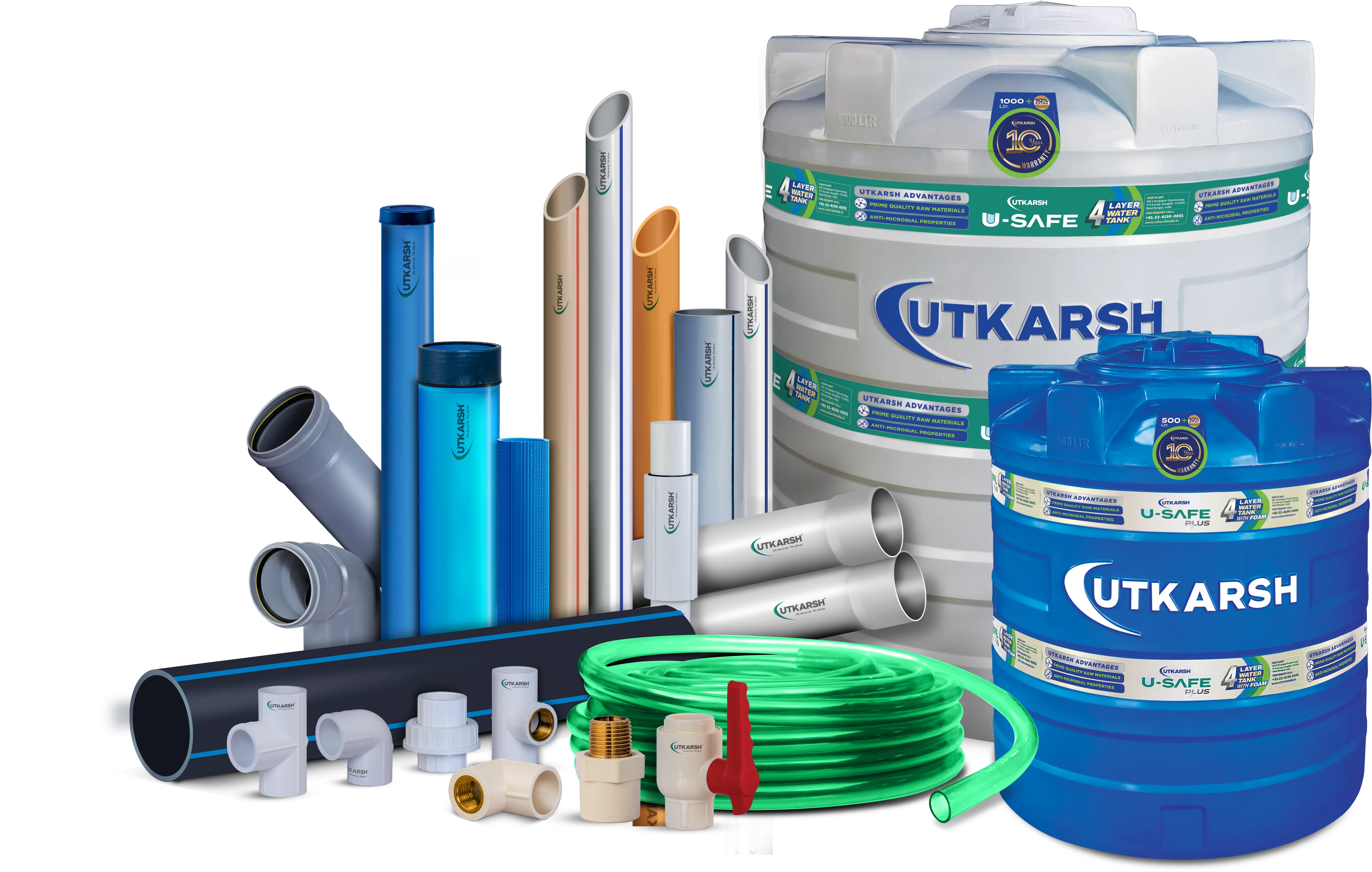
Before comparing, here is a quick look at the main pipe categories you will come across, and where each one fits. All of these are part of the range at Utkarsh Pipes & Fittings.
- CPVC Pipes & Fittings: Built for hot and cold potable water supply in homes, apartments, hotels, hospitals and commercial buildings.
- uPVC Pipes & Fittings (uFLO): Rigid, unplasticised PVC pipes for cold water plumbing lines.
- SWR Pipes & Fittings: Made for soil, waste and rainwater discharge, not for drinking water supply.
- PVC Casing Pipes: Used to line borewells and protect them from collapse and contamination.
- Column Riser Pipes: Connect submersible pumps to the surface in borewell systems.
- Agriculture Pressure Pipes: Designed for irrigation and water transport across farms.
- HDPE Pipes: Flexible, tough pipes for water mains, underground lines and long-distance supply.
- Garden Pipes: Flexible hoses for gardening, washing and everyday outdoor use.
Each of these pipes does its own job well. But when the question is which pipe works best inside your home for both hot and cold water, one material comes out ahead.
Why CPVC is the Best Pipe Material for Home Plumbing
PVC stands for Polyvinyl Chloride. CPVC stands for Chlorinated Polyvinyl Chloride. The names look almost the same, but the raw material is different.
CPVC is made by putting PVC resin through an extra chlorination process, which adds more chlorine atoms to the polymer chain. Standard PVC contains about 57% chlorine by weight, while CPVC typically contains around 63% to 69%. This change in chemistry makes CPVC a different material altogether, not just a stronger version of PVC.
Here is what that extra chlorine does:
1. Higher Heat Resistance
The added chlorine makes the polymer chain more stable at high temperatures. Standard uPVC pipes are best kept to cold water, as they are rated up to about 45°C. CPVC pipes can handle maximum service temperatures of 82°C to 90°C. That makes CPVC suitable for hot and cold water lines alike, from geysers and showers to kitchen taps.
2. Better Chemical and Corrosion Resistance
The chlorinated structure resists attack from chlorine in treated water, acidic water and many chemicals. Unlike metal pipes, CPVC does not rust or corrode from the inside.
3. Low Scaling, Cleaner Water
CPVC has a smooth inner surface that resists scale build-up and discourages biofilm formation. Water flow stays steady for years, and the water reaching your tap stays clean.
4. Strong Pressure Handling
CPVC holds its pressure rating well across temperatures, which is why it is available in different classes for different pressure needs.
5. Easy and Leak-Proof Joints
CPVC pipes are joined with solvent cement, which fuses the pipe and fitting together. With no threads to loosen over time, the joints stay sealed for the life of the system.
Also Read: Benefits of Using cPVC for Residential and Commercial Plumbing Systems
A Quick Comparison: uPVC vs CPVC
Here is how the two most discussed options compare side by side.
| Parameter | uPVC Pipe | CPVC Pipe |
|---|---|---|
| Material | Unplasticised polyvinyl chloride | Chlorinated polyvinyl chloride |
| Best use | Cold water lines | Hot and cold potable water |
| Max service temperature | Up to about 45°C | 82°C to 90°C |
| Corrosion resistance | High | High |
| Scaling | Low | Low |
| Weight | Light | Light |
| Joining method | Solvent cement or threading | Solvent cement |
| Installation | Easy | Easy |
| Maintenance | Low | Low |
| Water quality | Safe for cold potable water | Hygienic, smooth bore discourages biofilm |
The takeaway:
- uPVC is a cost-effective, reliable choice for cold water lines.
- CPVC handles both hot and cold water, resists corrosion and scaling, and is easy to install. This is why it has become the standard choice for water supply lines in modern Indian homes.
Where CPVC Is Not the Right Choice
CPVC is the strongest all-round option for indoor water supply, but it has limits worth knowing:
- Drainage lines: CPVC is for water supply. Soil, waste and rainwater lines need SWR pipes.
- Direct sunlight: Prolonged UV exposure weakens CPVC. Outdoor runs should be shielded, painted or concealed.
- Cold-water-only budgets: For lines that will never carry hot water, uPVC does the job at a lower cost.
- Long hot water runs: CPVC expands with heat, so long hot lines need proper support spacing and room for expansion.
- Borewells and farms: Casing pipes, column pipes, agriculture pressure pipes and HDPE pipes are built for these jobs.
Credibility and Standards of CPVC Pipes
Good CPVC pipes are not just about the material. They also need to meet recognised standards so you know they will perform as promised.
- IS 15778: The Indian Standard for CPVC pipes used in potable hot and cold water distribution. It defines the pressure classes used in India.
- ASTM D2846: The international standard for CPVC hot and cold water distribution systems. It covers SDR 11 pipes and fittings in Copper Tube Size dimensions.
- Copper Tube Size (CTS): CPVC plumbing pipes are commonly made in CTS dimensions, which keeps sizing consistent with standard fittings.
- Pressure classes by SDR: Under IS 15778, CPVC pipes come in classes based on SDR (Standard Dimension Ratio): SDR 11 (Class 1), SDR 13.5 (Class 2) and SDR 17 (Class 3). A lower SDR means a thicker wall relative to diameter and a higher pressure rating.
When you buy CPVC, always check that the pipe carries the standard markings, class and manufacturer details printed on it.
Why Choose Utkarsh CPVC Pipes and Fittings
Utkarsh CPVC pipes and fittings are made for home hot and cold water systems.
- Certified quality: Pipes manufactured to IS 15778, with the SDR 11 range also conforming to ASTM D2846
- Raw material: CPVC resins sourced from Japan
- Temperature range: Maximum service temperatures of 82°C to 90°C
- Testing: Every batch goes through a 6-stage quality check
- Pipe range: SDR 11 (Class 1) and SDR 13.5 (Class 2) from 15 mm to 50 mm, and SDR 17 (Class 3) from 65 mm to 100 mm, in 3 m and 5 m lengths
- Fittings: SDR 11 fittings from 20 mm to 100 mm
- Identification: Class 1 pipes carry a red stripe and Class 2 pipes carry a brown stripe
- Guarantee: Backed by a 50-year manufacturing guarantee
Utkarsh brings more than 50 years of manufacturing experience, an annual capacity of 68,000 MT and a network of over 5,000 dealers, 200+ distributors and 150,000+ plumbers and borers across India.
Frequently Asked Questions
Which pipe is best for plumbing in a house?
CPVC is the best overall pipe for home plumbing because it handles both hot and cold water, resists corrosion and scaling, and is easy to install with leak-proof solvent cement joints.
What is the difference between PVC and CPVC pipes?
CPVC is made by chlorinating PVC resin, which raises its chlorine content. This gives CPVC higher heat resistance, better chemical resistance and suitability for hot water lines, while standard uPVC is best kept to cold water.
Is CPVC better than GI pipe for home plumbing?
For most homes, yes. CPVC does not rust, resists scaling, is much lighter and is easier to install. GI pipes can corrode and build up scale over time, which reduces water flow and quality.
Which pipe is best for drainage in a house?
SWR pipes and fittings are made for soil, waste and rainwater discharge. CPVC and uPVC are water supply pipes and should not be used for drainage lines.
Can uPVC pipes be used for hot water?
uPVC pipes are designed for cold water and are rated up to about 45°C. For hot water lines, CPVC is the recommended choice.
Which standards should CPVC pipes follow in India?
CPVC pipes for potable water should conform to IS 15778. SDR 11 CPVC pipes and fittings are also commonly made to ASTM D2846. Check for these markings on the pipe before buying.
How long do CPVC pipes last?
Good quality CPVC pipes, installed correctly and used within their rated temperature and pressure, can last for decades. Utkarsh CPVC pipes are backed by a 50-year manufacturing guarantee.