















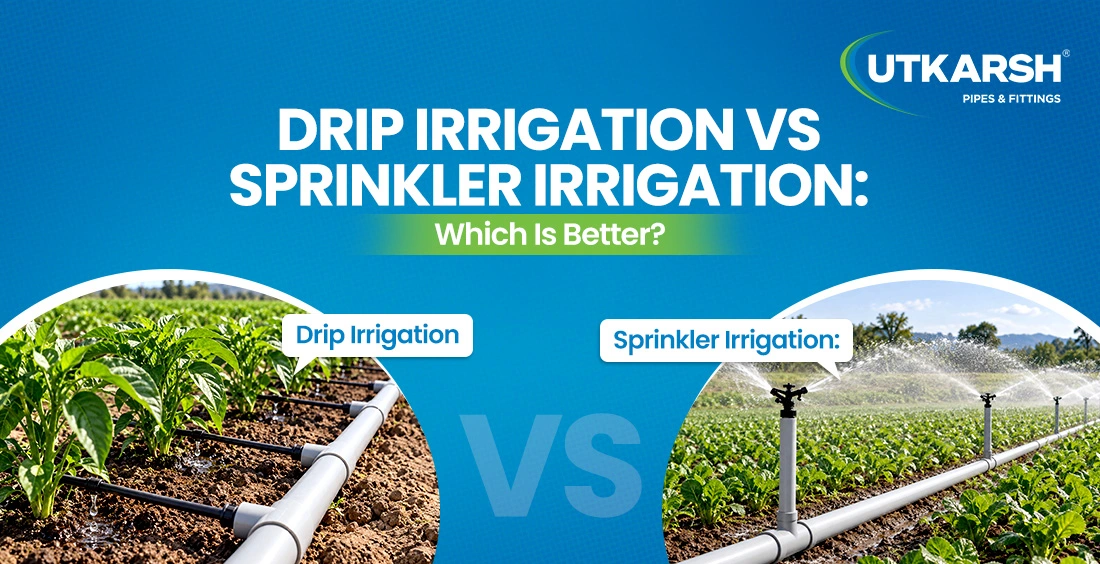
Drip Irrigation vs Sprinkler Irrigation: Which Is Better?
Every farmer faces the same problem. Water is limited, but crops need it on time. Use too little, and your yield drops. Use too much, and you waste money and deplete the water table. This is why choosing the right irrigation method matters so much.
Two systems lead the way in modern agricultural irrigation: drip irrigation and sprinkler irrigation. Both move water from the source to your field, but they do it in very different ways.
Drip irrigation sends water straight to the plant's root zone through a network of tubes and emitters. It is a form of micro-irrigation, built for precision and water savings. Sprinkler systems, on the other hand, spray water over the field like artificial rain. They cover large areas fast and suit a wider range of crops.
So, which one fits your farm? Drip irrigation works best for row crops, orchards, and farmers who want maximum irrigation efficiency. Sprinkler systems suit farmers growing cereals, grains, or pasture crops that need even, wide coverage. Let's break down both irrigation methods, so you can make the right call for your land.
Which Irrigation Method Saves More Water?
Water loss happens in two places: while the water travels from source to field, and while it's actually applied to the crop. The application stage is where drip and sprinkler systems differ most.
According to the Food and Agriculture Organization (FAO), field application efficiency averages around 90% for drip irrigation and 75% for sprinkler systems. Yara's agronomic research adds that drip irrigation can reach as high as 95% under well-managed conditions, largely because water goes straight to the root zone instead of passing through open air first. Sprinklers lose more to evaporation during the spray cycle, and that loss increases further when wind speeds pick up and drift takes water off target.
Winner: Drip irrigation. If saving water is your top priority, drip is the clear choice.
Which System Is Easier on Your Budget?
Cost plays out differently depending on your time horizon. Drip irrigation costs more to install, since it requires tubing, emitters, filters, and pressure regulators spread across the field. That upfront cost is offset over time: drip uses less water per season, which lowers your water bill, and it also cuts fertilizer runoff, which reduces input costs on nutrients. Most farmers recover the higher setup cost through these long-term savings.
Sprinkler systems flip that equation. They're cheaper to install, especially on flat, open land, and need fewer components per unit area. But they use more water and pump power, which raises running costs over each growing season.
Winner: Sprinklers win on upfront cost. Drip wins on long-term savings. Your choice comes down to budget today versus savings tomorrow.
Which System Needs Less of Your Time?
This one depends less on the system and more on your water source. If your water carries sediment or minerals, drip emitters can clog, so you'll need good filters and regular checks to keep them clear. The upside is that once a drip system is set up correctly and paired with timers, it runs with very little daily supervision.
Sprinkler heads are simpler to inspect and replace, and they tolerate dirtier water better than drip emitters. But they need more hands-on attention during each watering cycle, since wind, pressure changes, and coverage gaps all require manual adjustment.
Winner: It's close. Drip asks more of you upfront (filtration) but less during operation. Sprinklers are easier to maintain but need more monitoring while running. Let your water source and available time decide.
Which System Fits Your Farm?
Crop spacing and terrain matter more here than water savings or cost. Drip irrigation suits row crops, vegetables, orchards, and vineyards, where plants are spaced apart and each one can have its own emitter line. It also handles uneven or sloped land well, since water moves through pipes rather than open air, and it tends to reduce weed growth because only the root zone gets watered.
Sprinklers are built for the opposite scenario: closely spaced crops like wheat, paddy, and pasture grass, where the whole field needs even coverage. They work best on flat land, where the spray pattern stays consistent, and they can cover large areas quickly in a single cycle.
Winner: No clear winner here. It's about matching the method to your crop and terrain, not picking a universally better system.
Get more insights on: How Pipe Selection Impacts Irrigation Efficiency
Drip vs Sprinkler Irrigation: Quick Comparison Table
Our Recommendation
Choose drip irrigation if water scarcity is a major concern in your region or if you grow high-value, spaced-out crops. Choose sprinkler irrigation if you need to cover large, flat fields quickly and your water source can handle higher volumes.
Whichever method you pick, the quality of your irrigation equipment matters just as much as the system itself. Weak, low-grade pipes lead to leaks, pressure loss, and wasted water, no matter how good your irrigation design is.
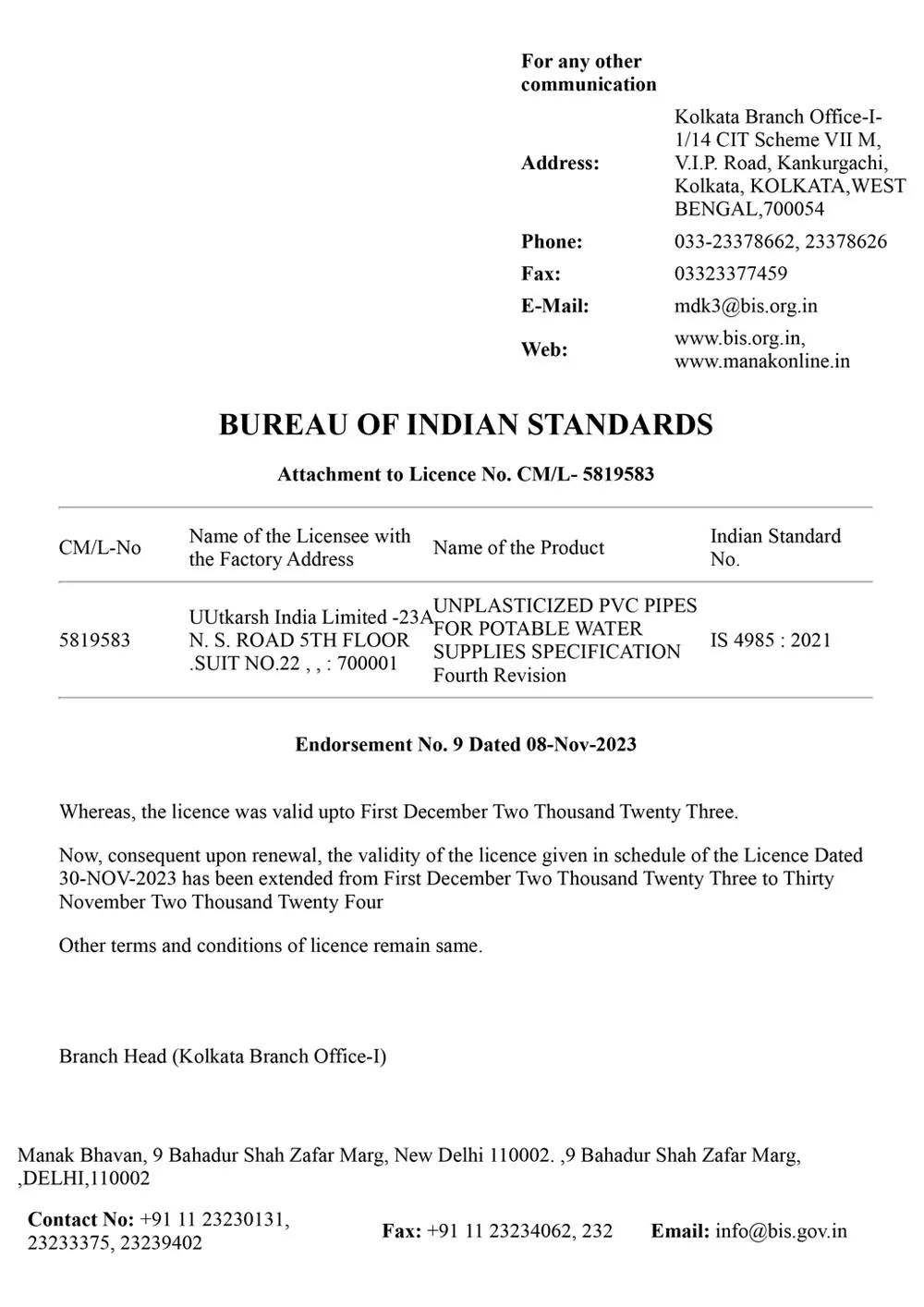
As a trusted agriculture pipe manufacturer with over 50 years of experience, Utkarsh offers Grey PVC Agriculture Pressure Pipes & Fittings built for both drip and sprinkler systems. These pipes are manufactured as per IS 4985:2021 standards, come in sizes from 40mm to 315mm, and are available in five pressure classes to match your exact field requirements. They resist corrosion, UV damage, and soil movement.
Whether you are setting up a new micro-irrigation network or upgrading your existing sprinkler system, Utkarsh Pipes & Fittings gives you the reliable backbone your irrigation setup needs. Explore the full range of agriculture pipes and fittings here and build a system that saves water and grows your yield.
FAQs
1. Which is better for small farms, drip or sprinkler irrigation?
Drip irrigation usually works better for small farms growing vegetables or fruit trees. It saves water and targets each plant directly, which matters more when land and water are limited.
2. Does drip irrigation really save more water than sprinklers?
Yes. Drip irrigation delivers water straight to the root zone with very little loss, reaching field application efficiencies of around 90% compared to roughly 75% for sprinklers, according to FAO data. This makes it one of the more water-efficient irrigation methods used in agriculture today.
3. Can I use the same pipes for both drip and sprinkler systems?
Main supply lines can often be shared, but the final delivery components differ: drip systems use tubing and emitters, while sprinkler systems use risers and spray heads.
4. Is sprinkler irrigation suitable for all types of crops?
Sprinkler irrigation works best for crops planted close together, like wheat, paddy, and grass. It is less ideal for tall or widely spaced crops like fruit trees, where drip irrigation performs better.
5. What pipe class should I choose for my irrigation system?
The right pressure class depends on your system's operating pressure, pipe diameter, and how the water is delivered (gravity-fed, pumped, or under sprinkler pressure). Checking your system's actual working pressure against the pipe's rated class, rather than guessing, is the safest way to avoid bursts or pressure loss. A local irrigation equipment supplier or the pipe manufacturer's spec sheet can help match the class to your setup.