















How Pipe Selection Impacts Irrigation Efficiency
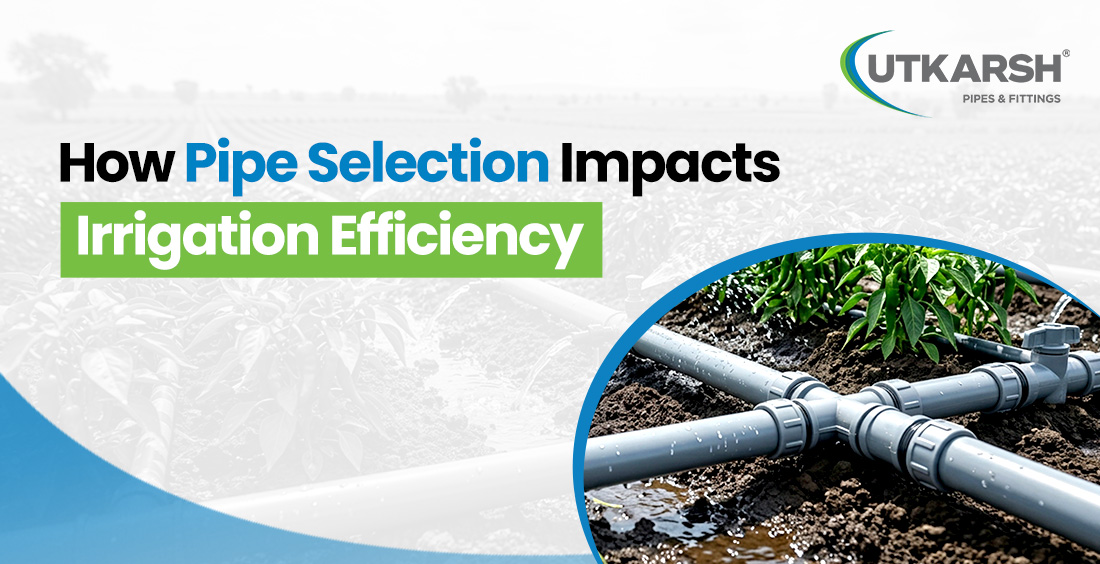
Water is one of the most valuable resources in agriculture, and every drop counts. While farmers often focus on irrigation methods, pumps, and water sources, the performance of an irrigation system also depends on one critical factor: pipe selection. Choosing the right PVC pipes for irrigation can significantly improve water distribution, reduce losses, lower maintenance costs, and support healthy crop growth.
As a premier PVC agriculture pipe supplier committed to empowering farmers, Utkarsh Pipes and Fittings brings you a deep dive into how selecting the right agricultural pipes directly impacts your farm's irrigation efficiency.
1. Water Conservation: Stopping the Hidden Leaks
Traditional irrigation channels like open-surface canals lose immense amounts of water to evaporation and ground absorption. Shifting to closed pipe systems is the first step toward sustainability. However, even within piping networks, the material you choose plays a massive role.
Using high-grade PVC pipes for irrigation virtually eliminates transit water loss. Unlike metal pipes that rust or concrete pipes that crack over time, modern PVC pipes feature seamless jointing systems, using advanced solvent cement or elastomeric sealing rings, that deliver leak-resistant performance. By preventing hidden underground leaks, you save precious water resources and reduce the energy needed to pump water across your fields.
2. Optimizing Hydraulic Flow and Pressure
Have you ever noticed weak water pressure at the far end of your sprinkler or drip system? This is often caused by friction inside the pipes.
The interior surface of PVC pipes for farming is hydraulically smooth. This ultra-smooth inner wall:
Reduces frictional resistance, allowing water to flow effortlessly
Prevents the buildup of sediment, algae, and chemical scaling
Maintains consistent water pressure throughout the entire length of the system
Consistent pressure ensures uniform water distribution, meaning crops at the edge of your field receive the same nourishment as those close to the water source.
3. The Backbone of Deep Water Extraction: Reliable Borewell Pipes
Groundwater is the primary source powering most farm irrigation, and extracting it efficiently requires a robust submersible pump connected to a heavy-duty borewell pipe.
The column and casing pipes installed inside a borewell face immense hydrostatic pressure, tensile load from the pump's weight, and highly corrosive underground water conditions. If a low-quality pipe cracks or fails deep inside the earth, it can lead to devastating pump loss and expensive repair work.
Utkarsh's uPVC column pipes use a specially designed square-thread system, male and female, engineered to handle the tensile loads created by the weight of the pump, water, and pipe column. Each pipe is tested to withstand this combined system load with a built-in safety factor, including the shock and jerk loads that occur during pump operation, ensuring a continuous and reliable supply of groundwater to your main irrigation lines.
4. Chemical and Weather Resistance: Long-Term Durability
Modern farming relies on fertigation, the practice of distributing liquid fertilizers and pesticides directly through the irrigation system.
Traditional metal pipes corrode quickly when exposed to these agricultural chemicals. PVC is chemically resistant and does not react with acidic fertilizers, highly alkaline soil, or pest control agents. High-quality agricultural PVC pipes are also UV-stabilized, meaning they can withstand harsh sun exposure without becoming brittle, cracking, or degrading over time.
How to Choose: Key Factors in Irrigation Pipe Selection
When designing your system, keep these essential factors in mind:
Soil Type & Terrain: Rigid PVC is well suited to flat terrains and underground mainlines, while flexible hoses work best on sloped or uneven land.
System Type: Drip and micro-sprinkler systems operate at lower pressures but require precise filtration, while overhead sprinklers need durable, high-pressure-rated PVC mainlines.
Pressure Ratings: Agricultural PVC pressure pipes are manufactured under IS 4985:2000 and classified from Class 1 to Class 5, each rated for a different pressure range. Make sure the pipe's pressure class matches your pump's output to avoid pipe bursts.
For a closer look at fitting selection, see our related post: How to Select the Right Agriculture PVC Pipe Fittings for Irrigation
Secure Your Harvest with Utkarsh Pipes and Fittings
Your irrigation network is a long-term investment. Choosing premium, lead-free, and high-durability piping systems not only saves water and energy but directly translates into healthier crops and higher profits.
As a trusted PVC agriculture pipe supplier, Utkarsh Pipes and Fittings manufactures ISI-marked, scientifically designed agricultural pipes that stand the test of time. Let's build an efficient, sustainable, and prosperous farming future together.
Frequently Asked Questions (FAQs)
Q1. Why is PVC preferred over metal pipes for agricultural irrigation?
PVC is highly resistant to chemical corrosion, rust, and scale buildup, unlike metal pipes. It is also lightweight, making it easy to transport and install, which reduces labor costs significantly.
Q2. How do smooth-walled PVC pipes improve irrigation efficiency?
The smooth inner surface of PVC pipes minimizes friction as water moves through the system. This reduces energy consumption by requiring less pumping power and helps maintain consistent pressure across your entire field.
Q3. What is the role of a borewell pipe in farm irrigation?
A borewell pipe, such as a uPVC column pipe, acts as the conduit that safely brings deep groundwater up to the surface. It must withstand high pressure, chemical corrosion, and the heavy weight of the submersible pump.
Q4. How do I choose the right pressure class for my agricultural PVC pipe?
Agricultural PVC pressure pipes are classified from Class 1 to Class 5 under IS 4985:2000, with each class rated for a different maximum working pressure. The right class depends on your pump's output pressure, the depth and length of your pipeline, and the terrain it covers. As a general rule, match or exceed your pump's rated output pressure with the pipe's class rating, and consult your supplier's technical team to confirm sizing before installation.