















What Causes Water Tank Overflow and How to Prevent It
An overflowing overhead tank is one of the most common water-wastage problems in Indian homes. Water runs down the side of the building, pools near the tank base, and adds to your electricity bill if a motor is left running. It's also easy to prevent once you know what causes it.
This guide covers overhead tanks specifically, since underground tanks face different overflow risks (soil pressure on the inlet line, limited valve access) that call for a separate set of fixes. If you're deciding between the two, our Overhead Tank vs Underground Water Tank comparison breaks down the trade-offs.
Why Water Tank Overflow Happens
1. No Automatic Shut-Off System
Many homes still fill their tank the old way: someone switches on the motor and has to remember to switch it off. Forget, and the tank overflows. This is the single biggest cause of water wastage in Indian households.
2. Faulty or Missing Float Valve
A float valve floats on the water surface and rises with the water level, shutting off supply once the tank is full. If it's broken, stuck, or missing, the tank keeps filling past capacity.
3. Blocked or Damaged Overflow Pipe
Every tank needs an overflow pipe to release excess water safely. Leaves, dirt, or insect nests can block it. Once blocked, water has nowhere to go but over the top.
4. Wrong Tank Size for Your Needs
An undersized tank means more fill cycles per day and more chances for someone to forget the motor is running. Sizing should be based on actual daily household consumption, not guesswork.
5. Old or Cracked Water Tank
Cracks and weak joints let water escape through the tank walls. This can look like overflow even when the tank hasn't reached its rated capacity, and it's a sign the tank itself needs replacing.
6. No Alarm or Warning System
Without a signal, you find out about a full tank only when you see or hear water spilling, by which point water has already gone to waste.
How to Prevent Water Tank Overflow
1. Install an automatic water level controller. It switches the motor on when the tank runs low and off when it's full, removing the guesswork entirely.
2. Inspect the float valve every three to six months. Confirm it moves freely and cuts off supply at the right level. Replace it at the first sign of sticking or wear; this single part prevents most overflow cases.
3. Clear the overflow pipe twice a year. A clean pipe guarantees excess water always has a safe way out.
4. Size the tank to your household. Match capacity to the number of people using water. A well-sized tank fills less often, which lowers the odds of a missed shut-off.
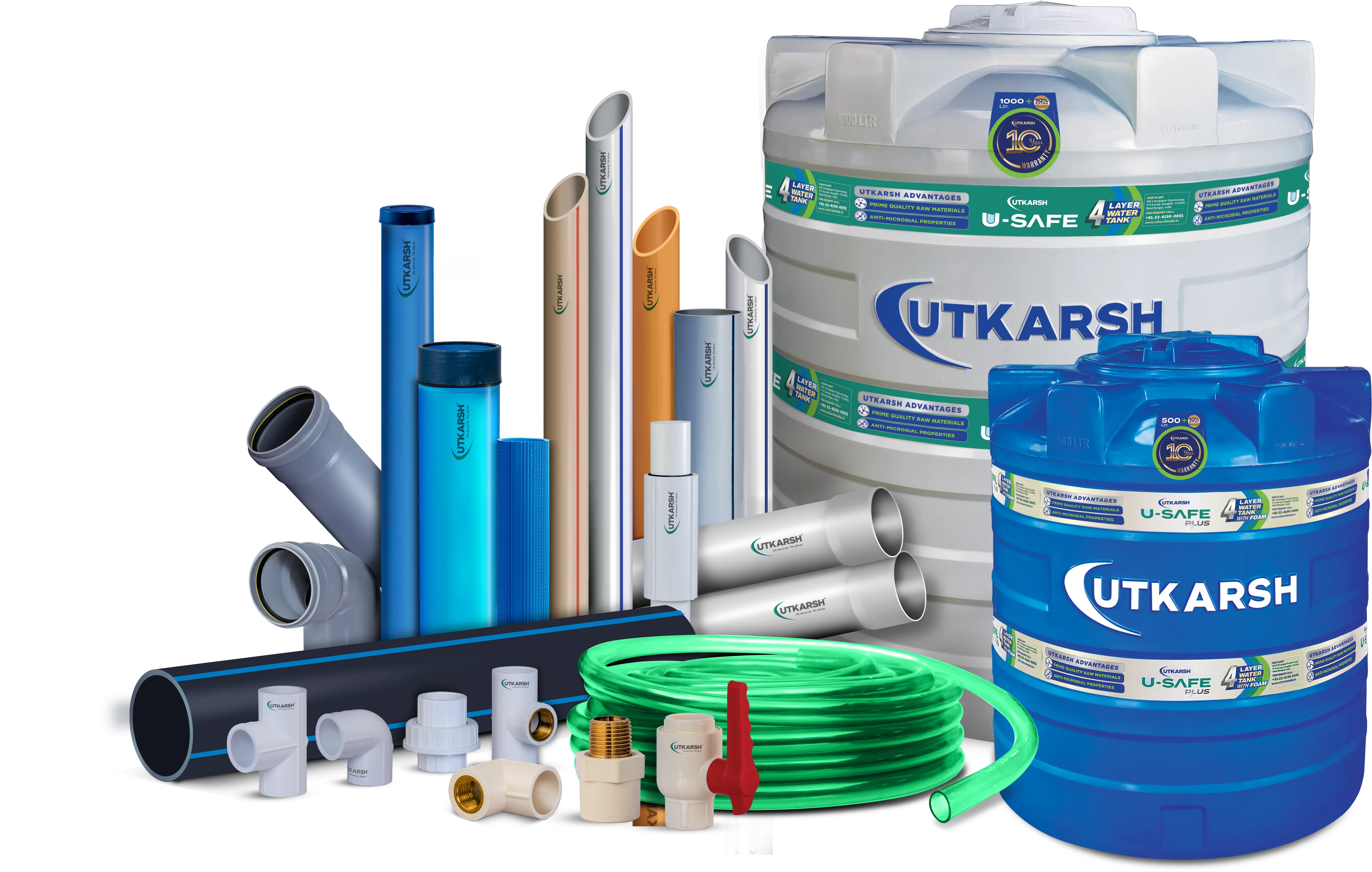
5. Choose a tank built for the job. Utkarsh's UJJAL (3-layer) and U-SAFE (4-layer) tanks use UV-stabilized layers to resist cracking in direct sun, and the U-SAFE PLUS adds a foam insulation layer with Microban protection for water hygiene. All three carry a 10-year warranty and come in 500, 750, and 1000-litre sizes, so sizing and durability can be solved in the same purchase.
6. Add an overflow alarm. For tanks in hard-to-reach spots like rooftops, an alarm gives you an instant warning instead of a wet wall after the fact.
Beyond these fixes, a simple habit helps: check the float valve, overflow pipe, and tank body together during the same seasonal inspection rather than treating them as separate jobs. Doing this together means you catch a stuck valve or a clogged pipe while it's a five-minute fix, not after it's caused a leak or a cracked tank.
Why Preventing Overflow Matters for Water Conservation
Every litre that spills from an overflowing tank is a litre wasted, and with water scarcity a growing concern in Indian cities, small habits at home add up. Preventing overflow protects both your water supply and your building from long-term damage.
Water Tank Installation Tips for Long-Term Safety
Place the tank on a flat, load-bearing base so it doesn't tilt or crack under weight.
Fit the overflow pipe and float valve at installation, not as an afterthought.
Keep the lid covered to stop dirt and insects from entering.
Leave clearance around the tank for cleaning and inspection.
Get more insights: What Are the Maintenance Tips for Long-Lasting Water Storage Tanks?
Conclusion
Most overflow problems trace back to one of three things: a missing float valve, a blocked overflow pipe, or no automatic shut-off. Fix those, and overflow stops being a recurring issue.
If you're installing a new tank or replacing a cracked one, explore the Water Storage Tanks range from Utkarsh Pipes and Fittings, built with the UJJAL, U-SAFE, and U-SAFE PLUS lines to cut down on both wastage and maintenance.
About Utkarsh Pipes and Fittings
Utkarsh Pipes and Fittings manufactures water storage tanks along with PVC, uPVC, HDPE, and CPVC pipes for home and commercial use, all built to reduce wastage and last for years.
FAQs
1. What is the main cause of water tank overflow?
A missing or faulty float valve, or forgetting to switch off the motor, are the two leading causes.
2. How can I stop my water tank from overflowing?
Install an automatic water level controller, check the float valve regularly, and keep the overflow pipe clear. These three steps cover most overflow cases.
3. What is a float valve, and how does it work?
It's a device that floats on the water surface and rises with the water level, shutting off supply once the tank reaches capacity.
4. Is an overflow pipe really necessary?
Yes. It gives excess water a safe exit if the tank fills beyond expected levels, preventing damage to the tank and surrounding structure.
5. How often should I check my water storage tank?
Check the float valve and overflow pipe every three to six months, with a full tank inspection once a year.
6. Does tank size affect overflow risk?
Yes. An undersized tank for the household fills more often, increasing the chance of overflow from human error.