














6 Things to Know About CPVC Pipes and Fittings by Utkarsh Pipes
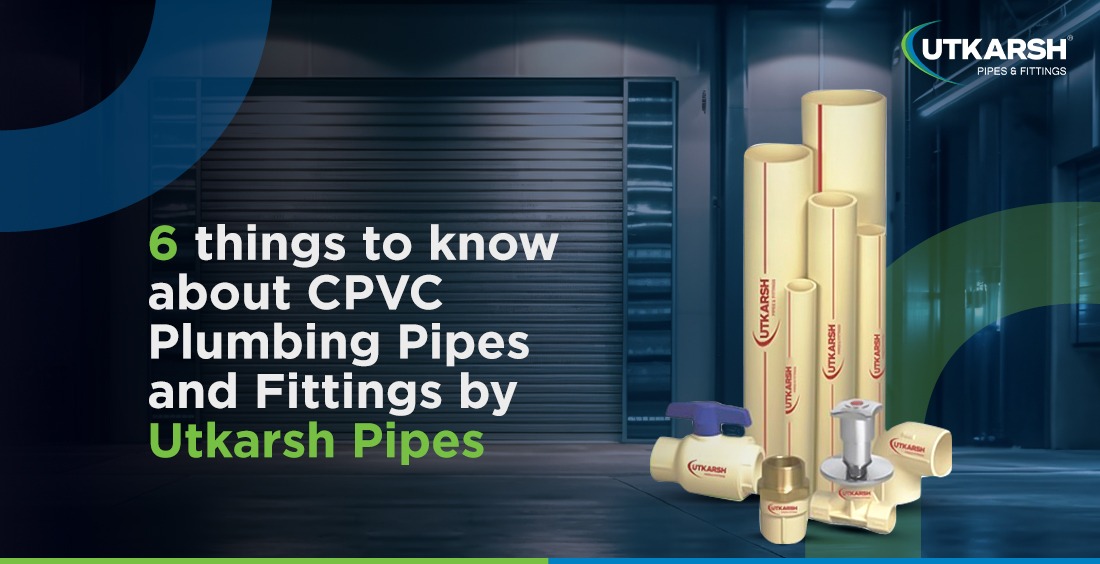
CPVC (chlorinated polyvinyl chloride) pipes and fittings are now the standard choice for hot and cold water lines in Indian homes, apartments, hotels, and hospitals. They handle hot water that would soften ordinary uPVC, they don't rust like GI pipes, and they join without threading or welding equipment.
Utkarsh Pipes has been manufacturing pipes and fittings for over five decades. Below are six things worth knowing before you choose CPVC for a project, including the sizes and standards our CPVC pipes and fittings are made to.
1. CPVC Is Built for Hot and Cold Potable Water
CPVC is PVC that has gone through an extra chlorination step. That added chlorine raises its heat tolerance, which is why CPVC is used for geyser lines, solar water heater connections, and mixed hot and cold supply inside buildings.
Under IS 15778, the CPVC pipe standard published by the Bureau of Indian Standards, pipes are intended for continuous water service up to and including 82°C. Many manufacturers also quote 93°C for short-term exposure. Pressure ratings drop as temperature rises, so hot water lines should be sized using the de-rating values for the pipe class you choose.
CPVC is also certified for potable (drinking) water and doesn't add taste or odour to the supply.
2. Sizes, SDR Classes, and Standards
CPVC pipes are graded by SDR (standard dimension ratio), which is the outside diameter divided by wall thickness. A lower SDR means a thicker wall and a higher pressure rating.
| Product | Class / SDR | Size Range | Standard |
|---|---|---|---|
| CPVC Pipes | Class 1 / SDR 11 | 15mm to 50mm | IS 15778 |
| CPVC Pipes | Class 2 / SDR 13.5 | 15mm to 50mm | IS 15778 |
| CPVC Pipes | Class 3 / SDR 17 | 65mm to 100mm | IS 15778 |
Pipes are available in 3 metre and 5 metre lengths. For most residential hot water lines, SDR 11 is the safer pick because of its thicker wall.
3. Leak-Proof Joints Start with Solvent Cement
CPVC pipes and fittings are joined by solvent-cement welding. The cement softens the surfaces of the pipe and fitting so they fuse into a single piece as it cures. Done properly, the joint is as strong as the pipe itself, and there's no rubber seal to wear out.
The basic steps are:
- Cut square: Cut the pipe at a right angle and remove burrs from the inside and outside edge.
- Dry fit: Check that the pipe enters the fitting socket snugly before applying cement.
- Apply CPVC cement: Use cement made for CPVC, not general PVC cement, which isn't designed for hot water service.
- Push and hold: Insert the pipe with a quarter turn and hold it for a few seconds so it doesn't push back out.
- Let it cure: Follow the cement manufacturer's curing chart before pressure testing or running hot water. Curing takes longer in cold weather and on larger sizes.
Where CPVC connects to taps, mixers, or threaded fixtures, transition fittings with brass inserts (MTA and FTA) are used. Wrap the threads with PTFE tape and avoid over-tightening.
On long hot water runs, leave room for thermal expansion with offsets or loops, and support the pipe at proper intervals so it doesn't sag when hot.
4. Corrosion Resistance and Where You Can Install CPVC
CPVC doesn't rust, scale, or corrode the way GI pipes do. It's also unaffected by the chlorine used in municipal water treatment, so flow capacity and water quality hold up over the years.
Where it works well:
- Indoor plumbing: Concealed or surface-mounted hot and cold lines in homes, apartments, hotels, and hospitals.
- Underground lines: Suitable when laid on proper bedding and backfilled without sharp stones, since the material won't corrode in moist soil.
- Outdoor and terrace runs: Usable, but CPVC needs protection from direct sunlight. Paint exposed pipes with a water-based acrylic paint or cover them, because long-term UV exposure weakens the surface.
Our CPVC range is designed for residential and commercial potable water plumbing. For other chemical or process lines, check compatibility with our team first.
Also Read: Chemical Resistance Benefits of CPVC Pipes in Residential Plumbing
5. Quality Testing Behind Every Batch
IS 15778 sets out the tests a CPVC pipe has to pass. Utkarsh CPVC pipes go through these at multiple stages of production:
- Opacity test: Confirms the pipe wall blocks light, which prevents algae growth inside the line.
- Visual appearance test: Checks for surface defects, uneven colour, and inconsistencies.
- Reversion test: Heats the pipe to check that its length stays stable at high temperature.
- Vicat softening temperature test: Measures the temperature at which the material starts to soften, confirming it can handle hot water service.
- Effect on water test: Confirms the pipe doesn't leach anything that affects drinking water quality.
You can view our certifications and approvals on the resources page.
6. Better Fire Performance Than Most Plastics
CPVC is self-extinguishing and does not support combustion once the flame source is removed. Its high chlorine content gives it a high limiting oxygen index, which means it needs far more oxygen than normal air contains to keep burning.
It will still burn if exposed to a direct, external flame, so it isn't fireproof. But it spreads flame slowly and adds less fuel to a fire than many other plastics, which is a real safety advantage in multi-storey buildings.
CPVC vs uPVC vs GI Pipes
| Factor | CPVC | uPVC | GI |
|---|---|---|---|
| Hot water | Yes, up to 82°C continuous | No, cold water only | Yes |
| Corrosion and scaling | None | None | Rusts and scales over time |
| Jointing | Solvent cement | Solvent cement | Threading |
| Weight and handling | Light | Light | Heavy |
| Best use | Hot and cold supply lines | Cold water supply lines | Older installations, being phased out |
Many buildings use both plastics: CPVC for hot water lines and uFLO uPVC pipes and fittings for cold water plumbing. For a wider comparison, read which pipe is best for home plumbing.
Why Choose Utkarsh Pipes?
Utkarsh Pipes is one of India's established CPVC pipe manufacturers, producing pipes and fittings at our plant in Gurap, West Bengal, for more than 50 years. Here's what that means for your project:
- BIS-certified pipes: Manufactured to IS 15778 with ISI marking.
- Full class range: SDR 11, 13.5, and 17 pipes from 15mm to 100mm, with matching fittings.
- In-house testing: A 6-stage quality check process at every production stage.
- Wide product family: CPVC, uPVC, SWR, HDPE, and agriculture pipes from one pipes and fittings manufacturer, which simplifies sourcing for builders and contractors.
Conclusion
CPVC is the right choice when a line has to carry hot water safely for years without rusting or scaling. Pick the correct SDR class for the pressure and temperature, join it with proper CPVC solvent cement, and protect any exposed sections from sunlight. Get those three things right and a CPVC system needs very little maintenance.
Need help choosing the right class or size? Contact our team or check the latest CPVC price list.
Frequently Asked Questions (FAQs)
1. What is the maximum temperature for CPVC pipes?
Under IS 15778, CPVC pipes are rated for continuous water service up to 82°C. They can tolerate around 93°C for short periods, but pressure ratings fall as temperature rises, so hot lines should be designed with the right SDR class.
2. Are CPVC pipes safe for drinking water?
Yes. IS 15778 covers CPVC pipes for potable hot and cold water, and pipes are tested to confirm they don't affect water quality. CPVC also resists chlorine in treated water, so it doesn't degrade the way some materials do.
3. CPVC vs uPVC: which is better for hot water?
CPVC. uPVC is designed for cold water and softens at higher temperatures. Use CPVC for geyser and solar heater lines and uPVC for cold water supply.
4. How are CPVC pipes joined?
With CPVC solvent cement, which chemically fuses the pipe and fitting into one piece. Threaded transition fittings with brass inserts are used only where CPVC connects to taps, valves, or other threaded fixtures.
5. Can CPVC pipes be used outdoors or underground?
Yes, with precautions. Underground lines need proper bedding and stone-free backfill. Exposed outdoor or terrace lines should be painted or covered, since prolonged sunlight can weaken the pipe surface.
6. Which SDR class should I use for home plumbing?
SDR 11 (Class 1) is the common choice for residential hot and cold lines because its thicker wall gives a higher pressure rating. SDR 13.5 suits lower-pressure applications, while SDR 17 covers larger sizes from 65mm to 100mm.