















Common Borewell Problems: Causes, Solutions & Prevention
A borewell is often treated as a one-time investment, drilled once and forgotten. But like any underground infrastructure, it is constantly exposed to soil pressure, groundwater chemistry, and mechanical wear. When these factors are ignored, they lead to serious borewell water problems, ranging from reduced water yield to complete system breakdowns. Understanding why borewells fail is the first step toward preventing costly repairs and ensuring an uninterrupted water supply for homes, farms, and industries.
What Causes Borewell Water Problems?
Borewell failures rarely happen overnight. They usually build up over months or years due to a combination of soil conditions, poor material selection, or lack of upkeep. Here are the most common causes behind groundwater well failures:
1. Poor Quality Casing Pipes
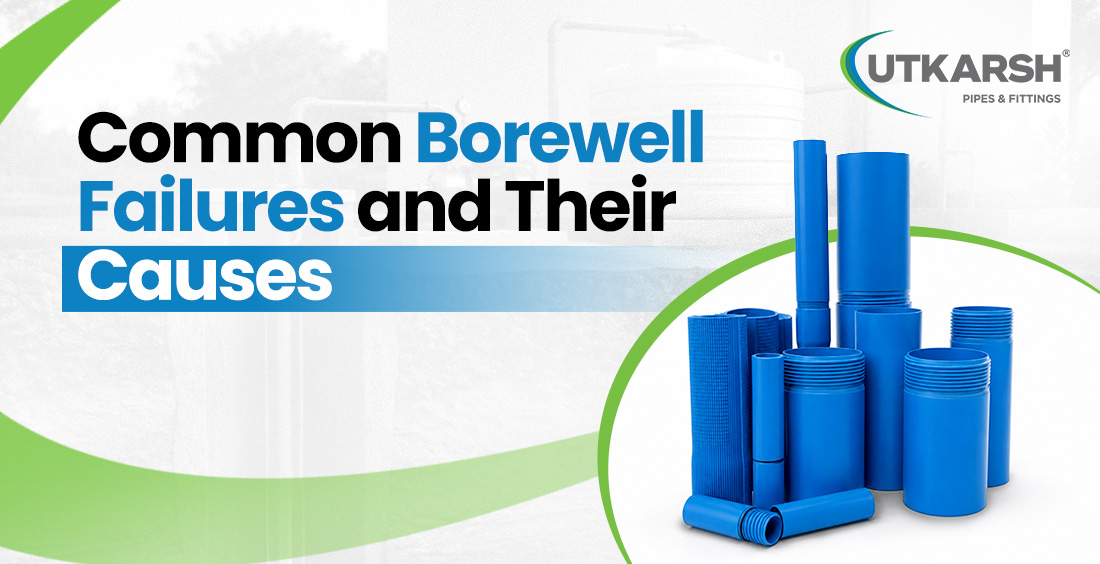
The casing pipe supports the borewell walls and prevents them from caving in. When low-grade or substandard pipes are used, they crack or collapse under soil pressure, allowing sand, silt, and debris to enter the well. This is one of the leading causes of reduced water flow and contaminated water supply.
Fix: Insist on ISI-marked PVC-U casing pipes manufactured to IS 12818, and have a certified driller inspect the casing before backfilling. Replacing a damaged section at installation is far cheaper than repairing a collapsed bore later.
Also read: Best Borewell Pipes for Borewell Projects
2. Corrosion and Chemical Reaction
Groundwater in many regions contains dissolved minerals, salts, and chemicals that react with certain pipe materials over time. Metal casings are especially prone to rusting and scaling, which narrows the pipe diameter, restricts water flow, and eventually contaminates the water.
Fix: In mineral-rich or corrosive groundwater, switch to PVC-U casing, which doesn't rust or scale. If you're already on a metal casing, a water test will confirm whether corrosion is narrowing the pipe before it fails outright.
3. Sand and Silt Ingress
In loose or sandy soil, borewells are highly vulnerable to sand ingress if the casing pipe is not properly perforated or sealed. Over time, this sand settles at the bottom of the well, reduces effective depth, and damages the submersible pump.
Fix: Use a correctly slotted well screen paired with a gravel pack sized to your soil's grain size. This filters out sand before it enters the bore. If sand is already present, the well may need redevelopment (flushing and surging) to clear it.
4. Borewell Pump Problems
Many borewell water problems are actually pump-related rather than well-related. Common borewell pump problems include:
Overheating due to continuous running without adequate cooling water flow
Vibration damage from poorly supported riser pipes, which stresses pump components
Voltage fluctuations that burn out the motor winding
Dry running, when the pump operates below the water table and damages internal parts
Fix: Match the pump to the borewell's actual yield and depth, install a voltage stabiliser, and fit an automatic low-water cutoff switch to prevent dry running. Support riser pipes properly to reduce vibration stress.
5. Weak or Leaking Joints
Threaded or solvent-welded joints that are not installed correctly can loosen over time, allowing water leakage inside the borewell column. This not only wastes water but also puts extra strain on the pump, as it has to work harder to maintain pressure.
Fix: Have joints inspected and re-sealed by a certified installer at the first sign of leakage, and use pipes with a reliable thread-lock or solvent-weld system rather than generic fittings.
6. Declining Water Table
Excessive groundwater extraction, especially during summer months, can cause the water table to drop below the pump's installed depth. This is one of the most common groundwater well failures reported across agricultural and residential borewells.
Fix: Re-lower the pump to match the new water level, deepen the borewell if needed, and space out heavy water usage during peak summer months to reduce strain on the aquifer.
7. Bore Collapse in Loose Soil
Borewells drilled in sandy, silty, or clay-heavy soil are prone to structural collapse if the casing pipe lacks sufficient strength. A collapsed bore restricts water movement and, in severe cases, renders the borewell unusable.
Fix: In sandy, silty, or clay-heavy soil, use a casing pipe rated for the specific depth and soil pressure involved, and have a professional assess whether the affected section needs re-casing before the collapse spreads.
Poor Borewell Signs You Shouldn't Ignore
Early borewell troubleshooting can save significant repair costs. Watch out for these warning signs:
Sudden drop in water pressure or flow rate
Muddy, sandy, or discoloured water coming from the tap
Unusual noise or vibration from the pump
Frequent motor tripping or overheating
Water yield is reducing steadily over weeks or months
Any of these signs are worth acting on quickly. Call a certified borewell technician to inspect the casing pipe, riser pipe, and pump connections rather than waiting for the problem to escalate into a complete system failure.
How to Check If Your Water Table Has Dropped
A dropping water table is one of the most common and most overlooked reasons for reduced borewell yield. To check it yourself: switch off the pump, then lower a sounding tape or weighted plumb line down the borewell until it touches water, and note the depth. Compare this static water level to the depth recorded when the borewell was first installed or last serviced.
A noticeable drop, especially when compared to the "dynamic" water level (the level after the pump has been running for a while), signals that the aquifer is being drawn down faster than it's recharging. If you see a steady drop over several weeks, it's a strong sign to space out water usage or have a professional reassess the pump's installation depth.
Borewell Maintenance Tips to Prevent Failures
Regular maintenance extends the life of your borewell system and prevents most of the failures discussed above. Follow these borewell maintenance tips for long-term reliability:
Choose the right casing pipe: Always use an ISI-marked, high-load-bearing casing pipe suited to your soil type and depth.
Inspect joints periodically: Check riser pipe joints for leaks or looseness at least once a year.
Monitor pump performance: Keep an eye on unusual sounds, vibrations, or frequent tripping, as these often signal early borewell pump problems.
Avoid over-extraction: Space out water usage during peak summer months to prevent the water table from dropping too low.
Get periodic water testing done: Testing helps detect early signs of sand ingress or corrosion-related contamination.
Hire certified borewell contractors: Proper installation depth, pipe alignment, and jointing techniques prevent most structural failures.
Good maintenance habits go a long way but they can only work with a casing pipe that's built to the right standard from day one. That's where your choice of pipe matters most.
Why Choose Utkarsh Pipes for Your Borewell System
At Utkarsh Pipes & Fittings, we've spent 40+ years engineering piping solutions built for these exact conditions. Our range of borewell casing pipes, column riser pipes, and uFLO uPVC pipes & fittings is manufactured to IS 12818, the Bureau of Indian Standards specification for PVC-U casing and screen pipes.
High Load-Bearing Capacity – Engineered to withstand heavy soil pressure without cracking or collapsing
Leak-Proof Joints – Precision thread-lock system that prevents water leakage at every connection
Non-Toxic & Safe – Lead-free materials suitable for potable water extraction
Corrosion & Chemical Resistant – Long-lasting performance even in mineral-rich groundwater
UV-Stabilized & Low Maintenance – Resistant to weathering, scaling, and bacterial growth
Whether you're setting up a new borewell or replacing a failing one, Utkarsh Pipes and Fittings are engineered to reduce downtime and long-term maintenance costs. Explore our PVC casing pipes to find the right size and class for your soil and depth, or read our guide to [IS 12818 casing pipe standards] for more on what to look for before you buy.
Wrapping Up
Most borewell water problems can be traced back to poor pipe quality, installation errors, or delayed maintenance. Catching the early signs — reduced pressure, unusual pump noise, a steadily dropping water table — and matching your casing pipe to your soil and depth from the start prevents the vast majority of failures covered in this guide.
Choose Utkarsh Pipes & Fittings for a reliable, corrosion-resistant PVC pipe for borewell applications. Explore our boring system solutions or get in touch with our team today.
FAQs
1. What are the most common causes of borewell failure?
The most common causes include poor-quality casing pipes, corrosion, sand or silt ingress, weak pipe joints, and a declining groundwater table. Using a durable PVC pipe for borewell applications helps prevent most of these issues.
2. What is the typical lifespan of a PVC borewell casing pipe?
A correctly installed, IS 12818-compliant PVC casing pipe typically lasts several decades, since PVC doesn't rust or scale the way metal casing does. Actual lifespan still depends on soil conditions, water chemistry, and installation quality.
3. Can a PVC casing pipe be repaired on-site, or does it need full replacement?
Minor issues like a loose joint or a small crack near the top of the casing can often be repaired on-site. Damage deep in the bore, or a section that has already let sand or debris in, usually needs that section replaced rather than patched.
4. How often should borewell maintenance be done?
It's recommended to inspect casing pipes, joints, and pump performance at least once a year, and more frequently in areas with sandy soil or mineral-heavy groundwater, to catch early signs of wear.
5. Can a collapsed borewell be repaired, or does it need re-drilling?
Minor collapses can sometimes be repaired by re-casing the affected section, but severe structural collapse usually requires re-drilling. Using a high-strength casing pipe from the start greatly reduces this risk.
6. What's the difference between PVC and HDPE casing pipes for borewells?
PVC casing pipes are lighter, easier to install with threaded joints, and are the standard choice for most residential and agricultural borewells under IS 12818. HDPE is more flexible and suited to certain deep or high-pressure applications, but typically costs more and needs specialised jointing equipment.
7. Does IS 12818 apply to residential borewells, or only industrial ones?
IS 12818 covers PVC-U screen and casing pipes for bore/tube wells generally, from 35 mm to 400 mm in diameter, so it applies across residential, agricultural, and industrial borewells. Look for the ISI mark on the pipe to confirm compliance.
8. How do I know if I need a well screen or gravel pack for my borewell?
If your soil is sandy or silty, a plain casing pipe alone often isn't enough to keep sediment out. A slotted well screen paired with a correctly sized gravel pack filters sand before it reaches the pump — worth discussing with your driller at installation, especially in loose-soil regions.