













How Modern Piping Systems Help Reduce Water Loss
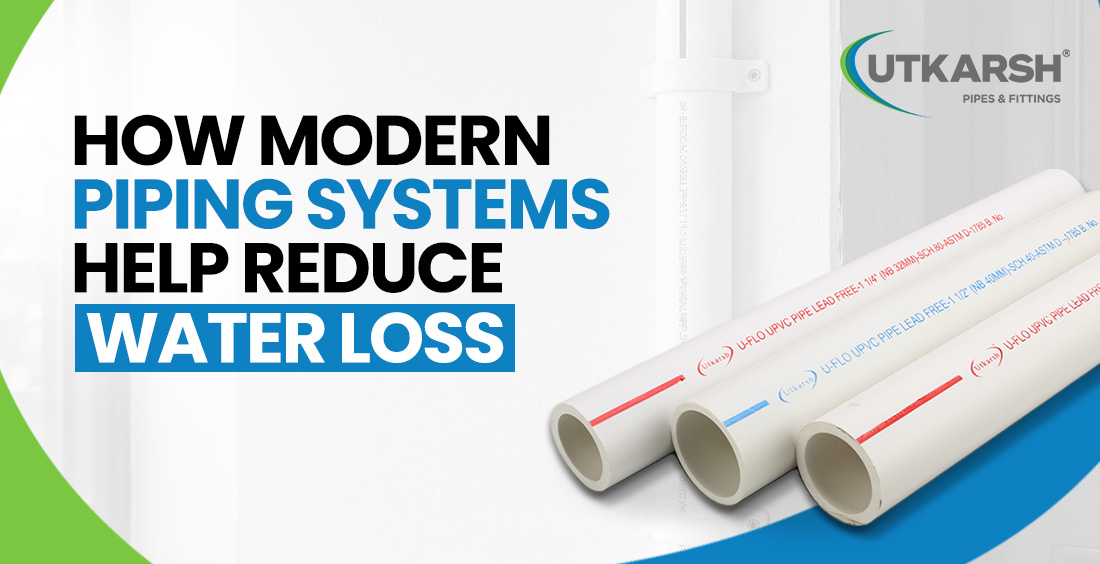
Water is one of the most valuable resources, yet millions of litres are lost every day due to aging pipelines, leaks, poor-quality materials, and inefficient water distribution systems. As governments and industries invest in sustainable infrastructure, modern piping technology has become a key solution for reducing water wastage while improving network efficiency.
Choosing the right manufacturer plays a significant role in building reliable water supply systems. High-quality pipes not only ensure uninterrupted water flow but also minimize leakages, reduce maintenance costs, and increase the lifespan of infrastructure.
In this article, we'll understand how modern piping systems contribute to water conservation and what makes advanced piping solutions more dependable than conventional alternatives.
Why Water Loss Is a Growing Infrastructure Challenge
Water loss occurs at different stages of the distribution network. Cracks, joint failures, corrosion, excessive pressure, and poor installation often result in significant wastage before water even reaches consumers.
Some of the major causes include:
Aging underground pipeline networks
Inferior quality pipe materials
Leakage at joints and fittings
Corrosion in metallic pipelines
Pressure fluctuations causing pipe bursts
Improper installation and maintenance
Modern piping systems are designed to overcome these issues through advanced engineering, superior raw materials, and strict quality control processes that support effective water loss prevention.
How Modern Piping Systems Reduce Water Loss
1. Superior Raw Materials Ensure Long-Term Durability
The foundation of a reliable pipeline begins with the quality of raw materials. Premium polymer compounds provide higher strength, excellent pressure resistance, and long service life.
Leading manufacturers conduct extensive quality checks on incoming raw materials before production begins. These tests typically include:
Melt Flow Index (MFI) testing
Density testing
Moisture analysis
Thermal stability evaluation
Material composition verification
By maintaining strict raw material standards, modern pipelines become more resistant to cracking, deformation, and leakage throughout their operational life.
2. Advanced Manufacturing Ensures Consistent Pipe Quality
Modern production facilities use automated extrusion lines that maintain uniform wall thickness and precise dimensions.
This consistency offers several benefits:
Better hydraulic performance
Stronger pressure-bearing capacity
Reduced chances of weak sections
Improved joint compatibility
Longer service life
A reliable pipe manufacturer follows standardized manufacturing practices to ensure every pipe meets national and international quality requirements.
3. Pressure-Tested Pipes Minimize Leakage Risks
Every pipeline experiences varying water pressure during operation. Poor-quality pipes often fail under pressure, leading to leakage and expensive repairs.
Modern piping systems undergo multiple quality inspections such as:
Hydrostatic Pressure Testing
Burst Pressure Testing
Dimensional Accuracy Testing
Impact Resistance Testing
Tensile Strength Testing
These quality checks significantly improve pipeline leakage control, ensuring safe water transportation across municipal, industrial, and agricultural applications.
4. Leak-Proof Jointing Systems Improve Network Reliability
Modern piping systems are engineered with precision socket designs and compatible fittings that provide secure connections.
Leak-proof joints help:
Prevent water seepage
Reduce maintenance frequency
Maintain consistent water pressure
Improve overall system efficiency
This becomes especially important in underground water supply projects where identifying leaks can be both difficult and expensive.
Choosing the Right Pipe for Every Water Distribution Need
Different water management applications require different types of piping systems. Modern polymer pipes are designed to meet specific operational requirements while ensuring durability, efficient water flow, and long-term water loss prevention. Selecting the right pipe helps improve system performance, minimize maintenance, and extend the lifespan of the entire network.
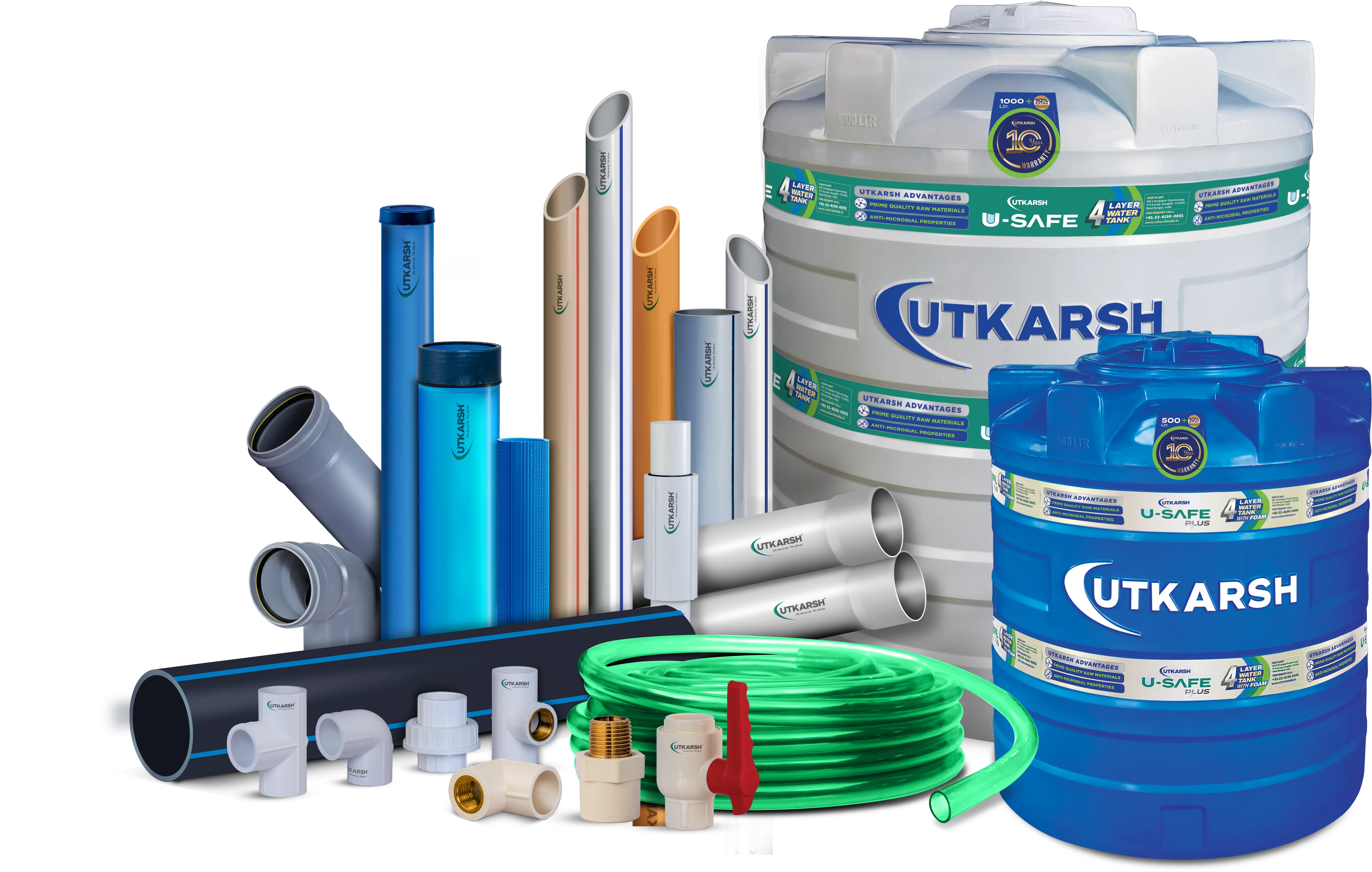
Common Types of Modern Piping Systems
UPVC Pressure Pipes – Widely used for potable water supply, municipal distribution networks, irrigation, and industrial water transportation due to their high strength, corrosion resistance, and long service life.
CPVC Pipes – Suitable for hot and cold water plumbing applications in residential, commercial, and industrial buildings, offering excellent temperature and chemical resistance.
HDPE Pipes – Preferred for underground water transmission, infrastructure projects, and large-scale irrigation networks because of their flexibility, impact resistance, and leak-resistant jointing capabilities. When comparing HDPE with traditional pipes, the ideal choice depends on the project's operating cost, conditions, and application requirements.
SWR Pipes – Designed for efficient soil, waste, and rainwater drainage systems. Their leak-proof joints and smooth inner surface facilitate faster wastewater flow while reducing maintenance needs.
Column Riser Pipes – Engineered for submersible pump installations, these pipes provide high tensile strength and reliable performance for groundwater extraction in agricultural and industrial applications.
PVC Casing Pipes – Used in borewell construction to protect the well structure from soil collapse and contamination, ensuring a stable and efficient groundwater source.
Agricultural Pipes – Specially developed for irrigation, water conveyance, and farming applications, helping deliver water efficiently across fields while reducing distribution losses.
Also Read: Questions to Ask Before Choosing a PVC Pipe Manufacturer
Selecting the appropriate piping solution not only enhances operational efficiency but also contributes to better pipeline leakage control, improved system reliability, and long-term water loss prevention across diverse water infrastructure projects.
Why Quality Testing Matters
High-performance pipes are not defined only by their raw materials but also by the quality assurance process followed during manufacturing.
A trusted manufacturer performs comprehensive testing throughout production, including:
Raw material quality verification
Online dimensional inspection
Hydrostatic pressure testing
Impact resistance testing
Visual quality inspection
Socket accuracy testing
Finished product inspection before dispatch
These quality control measures ensure consistent product performance under diverse operating conditions while supporting long-term water loss prevention.
Conclusion
Modern piping systems are no longer just conduits for transporting water; they are an essential part of sustainable infrastructure. From superior raw material selection and rigorous quality testing to leak-proof designs and compatibility with smart water infrastructure, advanced pipelines help utilities and industries significantly reduce water loss while improving operational efficiency.
When selecting a manufacturer, quality, manufacturing expertise, and product reliability should always be key considerations.
About Utkarsh Pipes & Fittings
Utkarsh Pipes & Fittings has established itself among India's trusted pipe and fittings suppliers by delivering high-performance piping solutions for residential, agricultural, commercial, and infrastructure projects. Manufactured using premium-grade raw materials and backed by stringent quality testing, including raw material validation, hydrostatic pressure tests, dimensional accuracy checks, and finished product inspections, its product range is built for durability and dependable performance.
Whether you require UPVC pressure pipes, HDPE piping solutions, or other advanced polymer piping systems, Utkarsh Pipes & Fittings offers reliable products designed to support efficient water distribution, minimize leakages, and build future-ready infrastructure.
FAQs
1. How do modern piping systems help reduce water loss?
Modern piping systems use high-quality materials, leak-proof joints, pressure-tested designs, and advanced manufacturing techniques to reduce leakage, improve durability, and enhance overall water distribution efficiency.
2. What is the difference between HDPE vs PVC pipes?
HDPE pipes are flexible and ideal for underground transmission and industrial applications, while PVC and UPVC pressure pipes are widely used for potable water supply due to their strength, corrosion resistance, and smooth internal surface.
3. Why is quality testing important for water pipelines?
Quality testing ensures pipes can withstand operating pressure, resist impact, maintain dimensional accuracy, and perform reliably over long service periods, helping reduce failures and water loss.
4. Why choose Utkarsh Pipes & Fittings for water infrastructure projects?
Utkarsh Pipes & Fittings combines premium raw materials, advanced manufacturing technology, and comprehensive quality testing to deliver durable piping solutions. As one of the trusted pipe and fittings suppliers, the company provides reliable products for efficient and long-lasting water distribution systems.