















Maintenance Tips for Ensuring Long-Lasting Column Pipe Performance
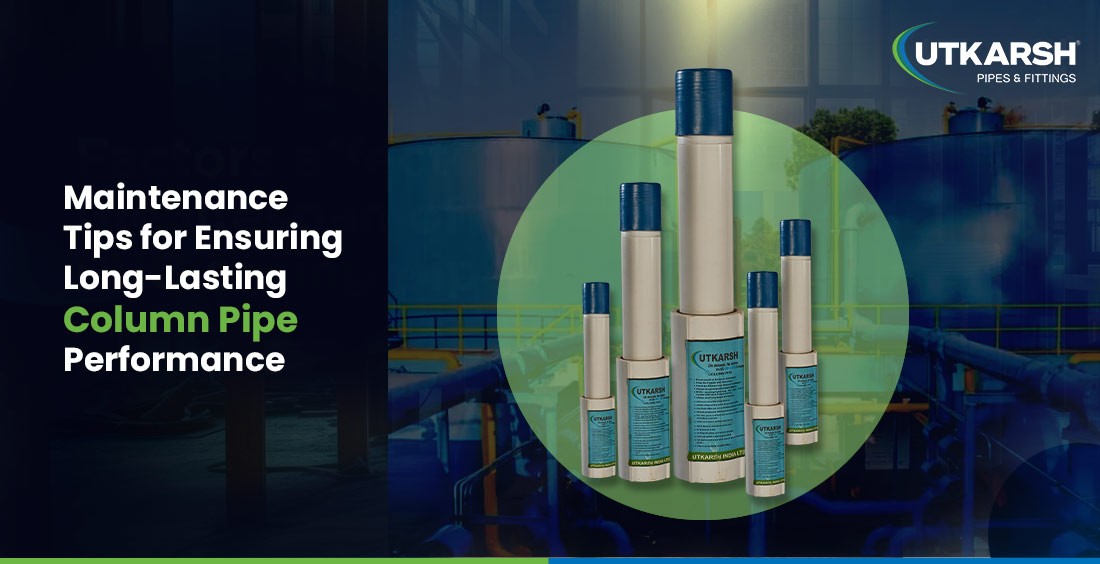
When it comes to reliable water management in borewells and deep-well applications, column pipes play a crucial role. Known for their strength and durability, these pipes ensure efficient water flow and support heavy submersible pumps. However, to maximize their performance and extend their lifespan, regular maintenance is essential. In this guide, we'll share practical maintenance tips for column pipes and explain why choosing a trusted column pipe manufacturer makes all the difference.
Understanding Column Pipes
Column pipes are specially designed to withstand high pressure and heavy loads in deep borewell applications. They are commonly used in agricultural, industrial, and domestic water systems to transport water from underground sources. Known for their strength, corrosion resistance, and leak-proof design, high-quality column pipes are essential for smooth water flow and long-lasting performance.
Top Maintenance Tips for Column Pipes
1. Conduct Regular Inspections
Check the pipe joints, couplings, and pipe body for cracks, leaks, or visible wear at least once every three to six months, or more frequently in heavy-use agricultural or industrial setups. Pay close attention to the sections near the pump and wellhead, since these bear the most stress. Catching a hairline crack early can save you from a full pipe failure and an expensive, time-consuming replacement later.
2. Ensure Proper Installation
A column pipe is only as reliable as its installation. Have the pipes installed by experienced professionals who understand correct alignment, torque specifications, and depth calculations for your borewell. Misalignment or incorrect fitting placement is one of the most common causes of joint failure and reduced water flow, and it's a problem that's much cheaper to prevent than to fix after the fact.
3. Use Manufacturer-Recommended Fittings
Always use fittings and couplings recommended by the pipe manufacturer rather than generic alternatives. Mismatched fittings can create weak points in the system that lead to leaks or pressure loss over time. If you're using uPVC column riser pipes, pair them with fittings built to the same tolerances for a secure, leak-proof connection.
4. Check for Corrosion and Scaling
Even corrosion-resistant pipes benefit from periodic checks for rust buildup, mineral scaling, or biofilm growth inside the pipe walls. Scaling is especially common in areas with hard water and can gradually narrow the pipe's internal diameter, reducing flow efficiency and putting extra load on the pump. A visual check combined with a flow-rate comparison against baseline readings will usually reveal early signs of scaling.
5. Monitor Pressure Levels
Keep pressure within the manufacturer's recommended operating range. Sudden pressure spikes, often caused by pump malfunctions or water hammer, can strain joints and cause cracks or bursts over time. Installing a pressure gauge at the wellhead makes it easy to spot irregularities before they become structural problems.
6. Clean the System Routinely
Periodic cleaning helps remove dirt, silt, or mineral deposits that accumulate inside the pipe and reduce efficiency. For borewell systems, flushing the column pipe assembly during routine pump servicing is a good practice, since it addresses both the pipe and the pump in a single maintenance cycle.
7. Replace Damaged Sections Promptly
If any section of the pipe shows cracks, deformation, or persistent leaks, replace it immediately rather than patching it temporarily. A single weak section can compromise the entire column, especially under the weight and vibration of a submersible pump. Keeping a few spare lengths and fittings on hand can minimize downtime when a replacement is needed.
Why Choose Utkarsh Pipes & Fittings?
With over 50 years of expertise in the piping industry, Utkarsh Pipes & Fittings has built a reputation for delivering superior-quality products designed for long-lasting performance. Our column pipes are manufactured using high-grade raw materials that ensure strength, durability, and resistance to corrosion, and each pipe undergoes rigorous quality checks to meet industry standards.
Conclusion
Regular maintenance is key to extending the lifespan of your column pipes and ensuring efficient water flow. By following these tips and choosing a trusted manufacturer, you can enjoy long-lasting performance and reduced maintenance costs.
Ready to upgrade your borewell system? Explore our range of column riser pipes or get in touch with our team for expert guidance on choosing the right pipes for your application.
Frequently Asked Questions
How often should column pipes be inspected?
For most residential and agricultural setups, an inspection every three to six months is sufficient. High-demand industrial applications may need more frequent checks, particularly around joints and the pump housing.
What are the early warning signs of column pipe failure?
Reduced water flow, unusual noises from the pump, visible cracks near joints, and a sudden drop in pressure are all signs that a column pipe may need attention.
Can column pipes be repaired, or do they need full replacement?
Minor surface wear can often be monitored, but cracks, joint failures, or persistent leaks generally call for replacing the affected section rather than attempting a temporary repair.