















Pipe Selection Checklist for Residential Construction Projects

A residential plumbing system is often hidden behind walls, floors and ceilings, but its performance directly affects the comfort, hygiene and maintenance needs of a home. A wrong decision at the pipe selection stage can lead to leakage, poor water flow, premature damage and expensive repairs after construction is complete.
The challenge is that pipe selection is not one single decision. The right product depends on the application, water temperature, pressure, pipe size, installation environment and compatibility with fittings. A pipe suitable for a cold-water supply system may not be the right choice for hot-water distribution, drainage or borewell applications.
This pipe selection checklist follows a practical, stage-by-stage approach to help homeowners, builders, contractors, architects and plumbing professionals make better decisions while planning residential plumbing systems.
Also Read: How to Choose Reliable Pipes Suppliers for Your Plumbing Projects
The Pipe Selection Process at a Glance
A reliable residential plumbing system is built through a series of connected decisions. Each stage influences the next:
Define the plumbing application
Assess water temperature and pressure requirements
Choose the right pipe material
Select the correct pipe size and diameter
Pay attention to pipe wall thickness
Evaluate the quality of pipe fittings
Consider the installation environment
Verify applicable quality standards
Complete the final checklist
Step 1: Define the Plumbing Application
Before comparing products or contacting a supplier, identify exactly where the pipe will be used. A residential building may have several plumbing requirements, and each application may require a different piping solution.
Consider whether the pipe is required for:
Cold-water supply
Hot-water distribution
Internal plumbing
Soil, waste and rainwater drainage
Borewell systems
Vertical water distribution
Underground water supply
External plumbing networks
Step 2: Assess Water Temperature and Pressure Requirements
Once the application is clear, the next step is to understand the operating conditions the pipe will face. Temperature and pressure are two of the most decisive factors in pipe selection, and a product suited to one set of conditions may not perform well in another.
For cold-water systems, consider:
Expected water pressure
Pumping conditions
Building height
Length of the pipeline
Number of fixtures
Pressure fluctuations and water hammer possibility
For hot-water systems, consider:
Expected operating temperature
Continuous or intermittent exposure to heat
Thermal expansion and contraction
Pressure conditions during operation
The jointing method used during installation
This is where the difference between uPVC plumbing pipes and CPVC systems becomes important. uPVC pipes are commonly considered for cold-water applications, while CPVC is designed for both hot and cold-water distribution, with the product engineered for the expected temperature range.
Pressure requirements should be checked against the pipe's rated pressure capability, keeping in mind that pressure performance can vary with pipe material, diameter, wall thickness and operating temperature. A proper pipe fittings selection process matters just as much here, since overall system performance depends on both the pipes and the joints.
Step 3: Choose the Right Pipe Material
The right pipe material should be selected based on the application, operating conditions and required performance, not simply on price or popularity.
uPVC Pipes for Cold-Water Plumbing
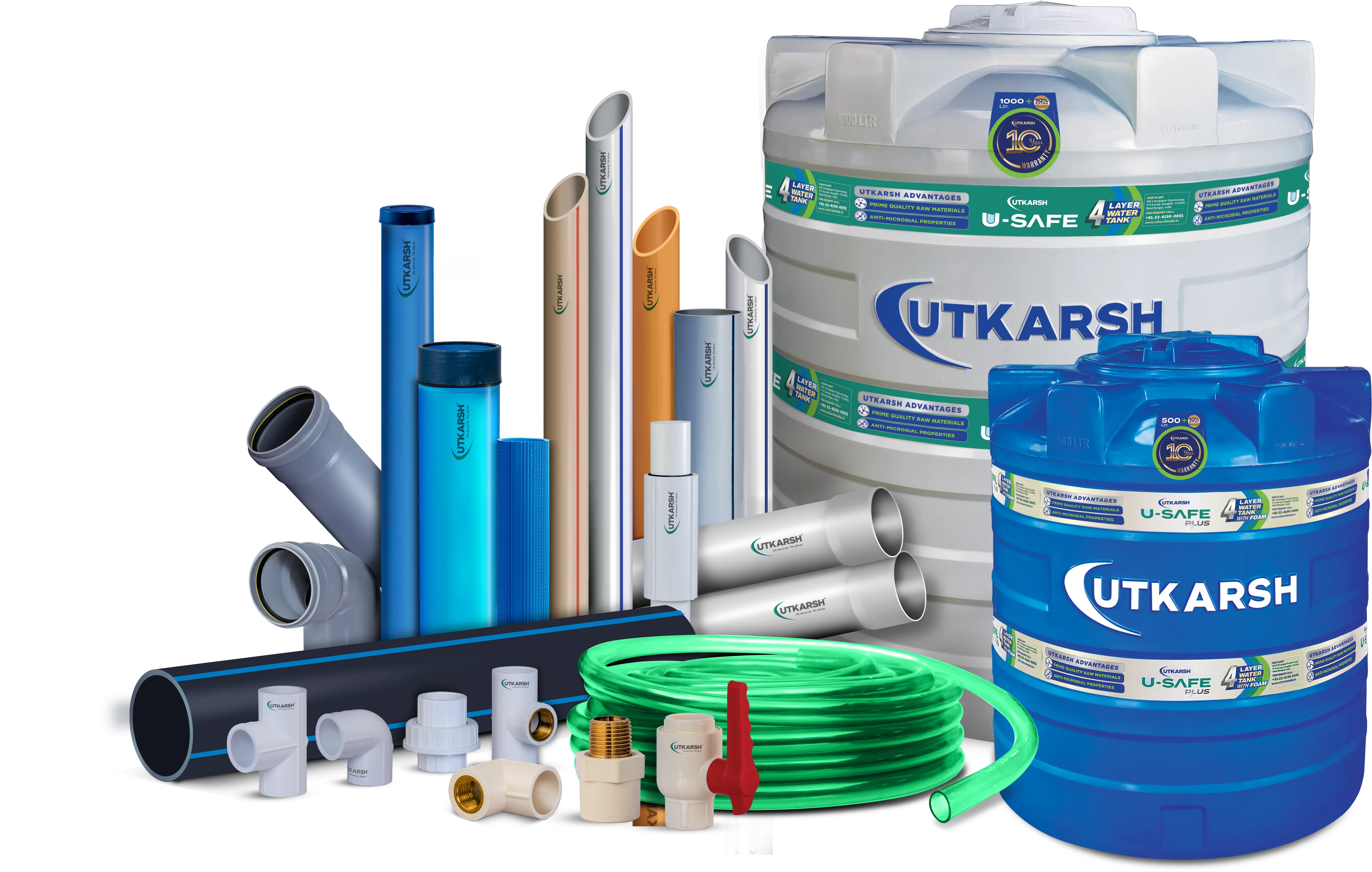
uPVC pipes are lightweight, corrosion-resistant and commonly used for residential cold-water plumbing and water distribution applications. When selecting uPVC pipes and fittings, ensure the fittings are compatible with the pipe system.
CPVC Pipes for Hot and Cold Water
CPVC pipes are designed for hot and cold-water distribution, making them a suitable choice for residential plumbing systems that require temperature resistance. When comparing CPVC pipe brands, consider product quality, technical specifications and compatible fittings.
SWR Pipes for Drainage
SWR pipes are used for soil, waste and rainwater drainage systems, with the right size and fittings selected according to the drainage layout. A compatible SWR pipe and fitting system supports efficient installation and reliable wastewater management.
PVC Casing Pipes for Borewell Applications
PVC casing pipes are used in borewell systems to support the bore structure and protect the water extraction system. Selection should consider factors such as borewell depth, ground conditions, diameter and installation requirements.
uPVC Column Pipes for Vertical Water Distribution
A borewell column pipe is used in pumping systems to transport water vertically from the submerged pump to the surface. Selection depends on factors such as pumping depth, pressure, pipe diameter and pump capacity.
HDPE Pipes for Water Supply Applications
HDPE pipes are used for select water supply and underground applications, offering flexibility and durability for suitable installation conditions. When choosing an HDPE pipe for water supply, consider the pressure requirement, joining method, installation environment and product specifications offered by a reliable HDPE pipe manufacturer.
Step 4: Select the Correct Pipe Size and Diameter
Pipe diameter affects water flow, pressure loss and the overall efficiency of the plumbing system.
A pipe that is too small may lead to:
Reduced water flow
Pressure loss
Increased noise
Poor performance at multiple outlets
A pipe that is unnecessarily large can increase material and installation costs without providing a practical benefit.
Pipe sizing should account for:
Number of fixtures
Expected water demand
Length of the pipeline
Number of bends and joints
Required flow rate
Building layout
Residential plumbing systems often require different pipe sizes for main supply lines, branch lines and connections to individual fixtures. Pipe size should therefore be selected as part of the overall plumbing design, not fixture by fixture.
Step 5: Pay Attention to Pipe Wall Thickness
Pipe wall thickness plays an important role in mechanical strength and pressure performance. However, thicker does not automatically mean a pipe is suitable for every application.
The right wall thickness depends on:
Material
Pipe diameter
Pressure requirement
Application
Relevant standards
Installation conditions
A professional selection process evaluates the complete specification rather than focusing on thickness or price alone. Buyers should check whether product specifications are clearly stated and whether the manufacturer maintains consistent quality across sizes and categories.
Step 6: Evaluate the Quality of Pipe Fittings
A plumbing system is only as reliable as its weakest connection. Even high-quality pipes can leak if unsuitable or poorly manufactured fittings are used.
Pipe fittings selection should account for:
Elbows
Tees
Couplers
Reducers
Adapters
Unions
Valves
End caps
The fittings should be compatible with both the pipe material and the installation method.
Step 7: Consider the Installation Environment
The environment in which the pipe will be installed can influence its performance.
Before finalising the product, consider whether the pipe will be:
Installed inside walls
Placed under floors
Installed underground
Exposed to sunlight
Installed near heat sources
Subject to external mechanical loads
Underground pipes may require different considerations than internal plumbing lines, and exposed pipes may need protection from environmental conditions. The pipe should be selected according to the actual installation environment, not just the intended application.
Step 8: Verify Applicable Quality Standards
Quality standards provide a benchmark for product performance and manufacturing consistency. Before purchasing residential plumbing pipes, check the applicable standards and certifications for the product category.
A reliable manufacturer should provide clear information on:
Product specifications
Applicable standards
Testing procedures
Dimensions and tolerances
Pressure performance
Material composition
Buyers should be cautious of products where this technical information is unclear or unavailable.
Step 9: Complete the Final Checklist
Before purchasing pipes for a residential construction project, check the following:
What is the pipe's intended application?
Is the material suitable for hot or cold water?
Is the pressure rating suitable for the system?