















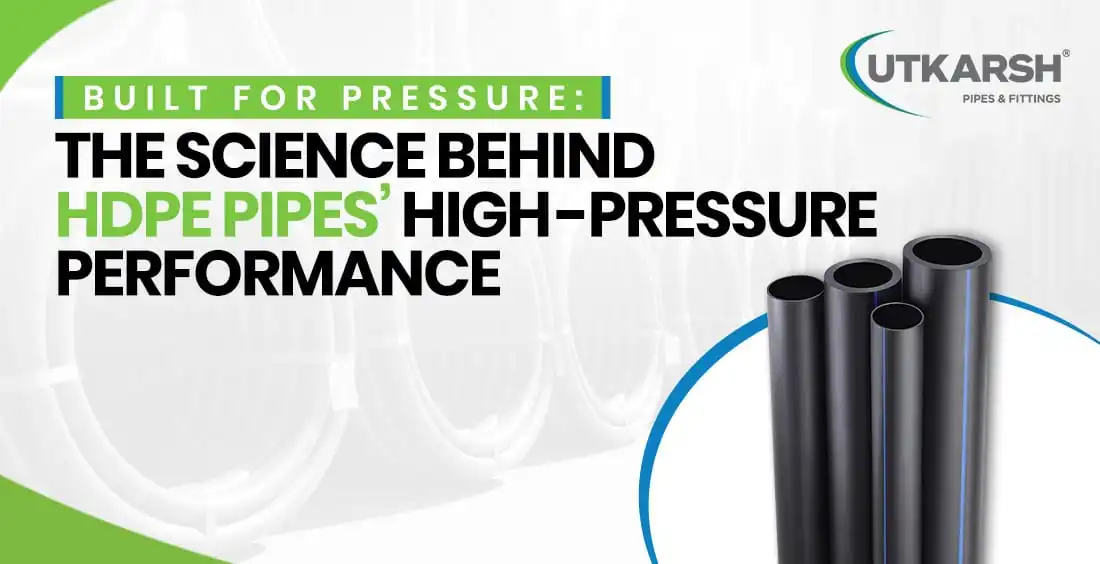
Built for Pressure: The Science Behind HDPE Pipes’ High-Pressure Performance
Pipeline systems used in water distribution, irrigation, and industrial applications must endure constant internal pressure, environmental exposure, and long operational cycles. Selecting the right piping material is therefore critical for ensuring system stability and durability.
High-Density Polyethylene (HDPE) has become a preferred material in modern infrastructure because of its exceptional strength, flexibility, and pressure resistance. Designed to withstand demanding operating conditions, HDPE pressure pipes combine advanced polymer science with efficient engineering design.
Manufacturers like Utkarsh Pipes and Fittings develop high-performance hdpe pipes & fittings that are specifically engineered to deliver durability, hydraulic efficiency, and long-term reliability in high-pressure applications. Understanding the scientific principles behind HDPE pipe strength helps explain why these pipes perform so effectively in critical pipeline networks.
What is the Scientific Methodology Behind the Raw Material Used in HDPE Pipes?
The high performance of HDPE pipes begins with the scientific engineering of the raw material itself. High-Density Polyethylene is a thermoplastic polymer created through the polymerization of ethylene molecules under carefully controlled industrial conditions.
During this process, the polymer chains are arranged in a dense molecular structure, producing a material with high tensile strength and superior mechanical stability. The minimal branching in HDPE molecules allows them to pack closely together, which significantly enhances the material’s ability to resist stress and pressure.
This molecular structure provides several key advantages:
High mechanical strength
Resistance to deformation under pressure
Long-term structural stability
Improved impact resistance
Utkarsh HDPE pressure pipes are manufactured using high-grade polyethylene compounds that ensure optimal HDPE pipe strength, allowing them to maintain performance even under demanding pressure conditions.
How Does Molecular Density Influence the Pressure Resistance of HDPE Pipes?
The term “high-density” in HDPE refers to the tight molecular packing within the polymer structure. This high molecular density directly contributes to the ability of the pipe material to resist internal pressure.
When fluids flow through a pipeline under pressure, the pipe walls experience continuous stress. HDPE’s dense molecular bonding distributes this stress evenly throughout the material, preventing localized weakness or structural deformation.
As a result, HDPE pressure pipes demonstrate exceptional resistance to pressure loads, making them suitable for applications such as:
Municipal water supply systems
Agricultural irrigation networks
Industrial fluid transportation
This structural strength is one of the primary reasons why hdpe pipes & fittings are widely used in infrastructure projects requiring long-term reliability.
How is the Pressure Rating of HDPE Pipes Scientifically Determined?
The HDPE pipe pressure rating represents the maximum internal pressure that a pipe can safely withstand during continuous operation. This rating is established through engineering calculations and standardized testing procedures.
Several factors determine the pressure rating of HDPE pipes:
Polymer material grade (such as PE-63, PE-80, or PE-100)
Pipe diameter and wall thickness
Standard design safety factors
Long-term hydrostatic strength tests
Utkarsh HDPE pressure pipes are available in pressure classes ranging from 2.5 kgf/cm² to 16 kgf/cm², enabling them to support a wide range of water supply, irrigation, and industrial pipeline applications.
Why is Flexibility an Important Advantage in High-Pressure Pipeline Systems?
Unlike rigid materials such as concrete or metal, HDPE pipes possess a unique combination of strength and flexibility. This flexibility allows the pipes to absorb external stresses and pressure fluctuations without cracking.
In high-pressure systems, this property provides several operational benefits:
Resistance to sudden pressure surges
Adaptability to ground movement and soil settlement
Reduced risk of structural failure
Utkarsh hdpe pipes & fittings are designed to maintain structural integrity even when exposed to dynamic environmental and pressure conditions.
How Does the Internal Surface Structure Improve Hydraulic Efficiency?
Another important scientific feature of HDPE pipes is their smooth internal surface. Unlike conventional pipes that may develop roughness or scale over time, HDPE maintains a consistent inner surface throughout its lifespan.
This smooth surface offers multiple hydraulic advantages:
Reduced friction during fluid flow
Lower pumping energy requirements
Minimal pressure loss over long distances
Because of this property, HDPE pressure pipes help maintain efficient water transportation while supporting stable pressure conditions across pipeline systems.
How Do HDPE Pipes Resist Long-Term Structural Damage Under Pressure?
Pipeline materials exposed to continuous pressure can experience gradual structural damage over time. One such phenomenon is slow crack growth, where microscopic cracks develop within the material.
Advanced HDPE compounds are engineered to resist this issue by improving the material’s crack propagation resistance. This ensures that even under continuous pressure cycles, the pipe maintains its structural stability.
Utkarsh HDPE pipes & fittings are manufactured with high resistance to slow crack growth, enabling them to perform reliably for decades in demanding environments.
How Do HDPE Pipes Minimize Leakage in High-Pressure Systems?
Leakage is a common challenge in pipeline systems, particularly when numerous joints and connections are involved. HDPE piping systems are designed to address this challenge effectively.
Two important design advantages contribute to leak prevention:
1. Long Pipe Lengths
HDPE pipes can be supplied in longer lengths, reducing the number of joints required during installation.
2. Reliable Fittings
High-quality hdpe pipes & fittings provide secure and durable connections that maintain system integrity even under pressure.
By minimizing joint points, HDPE systems significantly reduce the risk of leakage and improve overall pipeline reliability.
How Do HDPE Pipes Contribute to Sustainable Infrastructure?
In addition to their exceptional HDPE pipe strength and ability to perform under high pressure, HDPE pipes also support environmentally responsible infrastructure development. The material requires relatively lower energy during manufacturing and offers a long operational lifespan, reducing the need for frequent replacement and repairs.
HDPE pipes are corrosion-resistant and highly durable, which helps minimize leakage and water loss in pipeline networks. Their lightweight design also reduces transportation emissions and simplifies installation, making them a more sustainable piping solution for modern infrastructure projects. These factors highlight the broader environmental advantages of HDPE pipes, demonstrating how advanced polymer materials contribute to efficient resource management and long-term environmental sustainability.
What Factors Contribute to the Long Service Life of HDPE Pressure Pipes?
One of the most significant benefits of HDPE piping systems is their extended operational lifespan, which can exceed 50 years or more when installed correctly.
This durability is supported by several scientific properties of the material:
Resistance to corrosion and chemical reactions
Protection against scale and deposit formation
Strong molecular bonding within the polymer structure
Ability to withstand pressure fluctuations without damage
Because of these properties, HDPE pressure pipes offer a dependable solution for long-term infrastructure projects.
Why Are Utkarsh HDPE Pipes and Fittings a Reliable Choice for High-Pressure Applications?
With advanced manufacturing processes and strict quality standards, Utkarsh Pipes and Fittings produces hdpe pipes & fittings that meet the performance requirements of modern pipeline systems.
Key features include:
Pipe diameter range from 20 mm to 315 mm
Pressure ratings up to 16 kgf/cm²
High mechanical strength and durability
Lightweight construction for easier installation
Resistance to corrosion and abrasion
These characteristics ensure that Utkarsh HDPE pressure pipes provide consistent performance in water supply networks, irrigation systems, and industrial applications.
Also Read: The Growing Role of HDPE Pipes in Subsea Applications
Conclusion
The ability of HDPE pipes to withstand high pressure is rooted in advanced polymer science, engineered material density, and precise manufacturing processes. These factors collectively contribute to the exceptional HDPE pipe strength that modern infrastructure systems depend on.
By combining strong molecular structure, hydraulic efficiency, flexibility, and long-term durability, Utkarsh HDPE pipes & fittings provide a reliable solution for high-pressure pipeline applications.
For projects that demand durability, efficiency, and long service life, HDPE pipes continue to be one of the most scientifically advanced piping solutions available today.
FAQs
What gives HDPE pipes high pressure strength?
HDPE pipes achieve high strength due to their dense molecular structure and strong polymer bonding, which allows them to resist internal pressure effectively.
What is the typical HDPE pipe pressure rating?
The HDPE pipe pressure rating generally ranges from 2.5 kgf/cm² to 16 kgf/cm², depending on pipe thickness and material grade.
Why are HDPE pressure pipes used in water supply systems?
They are durable, corrosion-resistant, and capable of handling continuous internal pressure while maintaining efficient fluid flow.
How long do HDPE pipes last?
HDPE pipes can last 50 years or more, depending on installation quality and operating conditions.
Are HDPE pipes resistant to corrosion?
Yes. HDPE pipes are highly resistant to corrosion, chemical reactions, and scaling, making them ideal for long-term pipeline use.