















What Affects Sewage Pipe Price? Key Cost Factors Explained
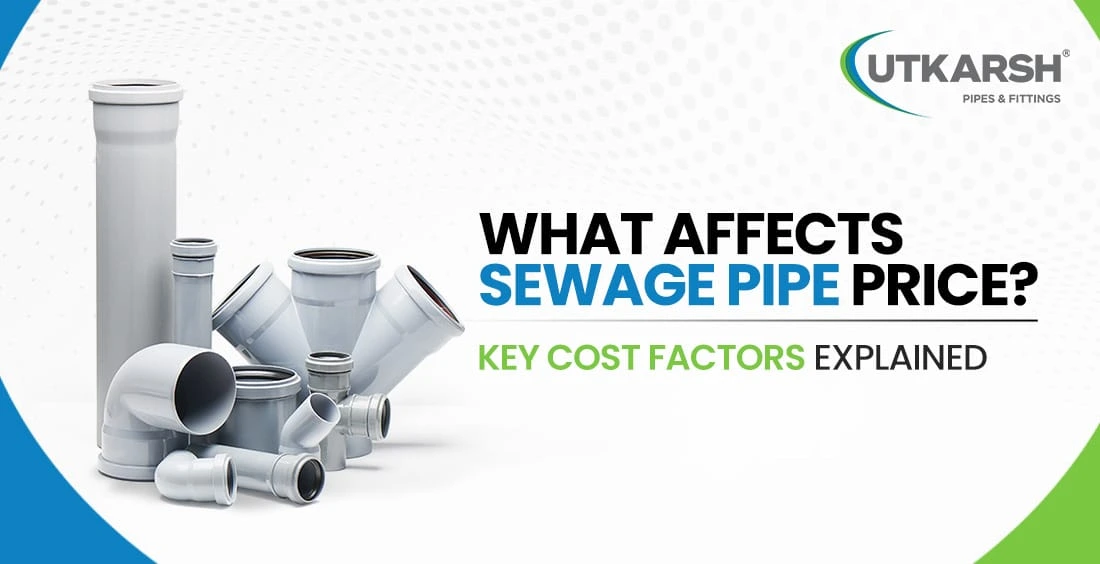
Sewage systems are one of the most critical components of any residential, commercial, or industrial infrastructure. While many buyers often focus solely on the sewage pipe price, the actual cost of a sewage piping system depends on several technical and performance-related factors.
From material quality and pipe strength to installation requirements and durability, multiple elements influence the overall drainage pipe price. Understanding these factors helps property owners, contractors, builders, and infrastructure planners make informed purchasing decisions without compromising on performance.
In this guide, we explain the major factors affecting pipe price and why investing in quality sewage pipes often delivers better long-term value.
Why Choosing the Right Sewage Pipe Matters
Sewage pipes are responsible for transporting wastewater, soil discharge, and rainwater safely away from buildings. Poor-quality pipes can lead to leakages, blockages, maintenance issues, and costly repairs.
Modern sewage systems commonly use SWR (Soil, Waste & Rain) pipes, uPVC pipes, and other specialized drainage solutions because of their durability, corrosion resistance, and long service life. Quality sewage pipes are designed to provide uninterrupted flow, withstand harsh environmental conditions, and maintain structural integrity for years.
Key Factors Affecting Sewage Pipe Price
1. Type of Material Used
One of the primary factors influencing pipe prices is the raw material used in manufacturing. Understanding The Importance of Strong Materials is essential when evaluating sewage pipes, as the quality of the material directly impacts durability, performance, and service life.
Common pipes used in sewage system applications include:
SWR Pipes
uPVC Pipes
CPVC Pipes (for specific applications)
HDPE Pipes (industrial and municipal applications)
High-grade polymers provide better strength, corrosion resistance, and durability. Premium materials typically increase manufacturing costs but significantly reduce maintenance expenses over time.
For example, quality SWR and uPVC pipes offer excellent resistance to chemicals, corrosion, and environmental degradation, making them a preferred choice for modern sewage systems.
2. Pipe Diameter and Wall Thickness
Larger pipe diameters require more raw material during production, naturally increasing the sewage pipe price.
Similarly, thicker pipe walls offer:
Higher load-bearing capacity
Better impact resistance
Improved durability
Longer service life
Municipal projects, commercial buildings, and industrial facilities often require larger-diameter sewage pipes compared to residential projects, which can influence the overall project cost.
3. Manufacturing Quality Standards
Not all sewage pipes are manufactured to the same quality standards.
Pipes produced using advanced manufacturing technology undergo rigorous testing for:
Dimensional accuracy
Pressure resistance
Leak-proof performance
Structural strength
Long-term durability
Manufacturers investing in modern production facilities and strict quality control processes generally produce pipes with higher reliability and performance. While such products may command a premium, they often provide better value throughout their lifecycle.
4. Leak-Proof Joint Technology
The quality of pipe joints plays a major role in both performance and cost.
Advanced sewage systems utilize:
Solvent-weld joints
Ring-fit joints
Specialized sealing systems
Gold-seal leak-proof technologies
Leak-proof joints prevent wastewater leakage, groundwater contamination, and structural damage. Enhanced joint technologies increase manufacturing complexity, which can influence the drainage pipe price. However, they significantly reduce future maintenance and repair costs.
5. Corrosion and Chemical Resistance
Sewage pipes are constantly exposed to:
Wastewater chemicals
Cleaning agents
Soil contaminants
Moisture
Industrial effluents
Pipes with superior chemical and corrosion resistance require specialized formulations and quality raw materials.
High-performance sewage pipes are specifically engineered to resist chemical attack and maintain smooth flow characteristics even under challenging operating conditions. This durability contributes to their overall cost but extends service life considerably.
6. Load-Bearing and Structural Strength
Underground sewage networks experience significant external pressure from:
Soil loads
Vehicle traffic
Construction activities
Ground movement
Pipes designed to withstand higher loads require enhanced engineering and manufacturing processes.
Strong, durable sewage pipes reduce the risk of cracks, deformation, and collapse, making them a worthwhile investment for long-term infrastructure projects.
7. Smooth Internal Surface Design
The internal surface quality of a sewage pipe directly affects its performance.
Smooth inner walls help:
Reduce friction losses
Improve wastewater flow
Minimize clogging
Lower maintenance requirements
Pipes engineered with superior flow characteristics often require more precise manufacturing techniques, which can contribute to cost differences. However, they improve system efficiency and reduce operational issues.
8. Weather and UV Resistance
In many regions of India, sewage infrastructure faces:
Extreme heat
Heavy monsoons
UV exposure
Temperature fluctuations
Pipes with UV stabilization and weather-resistant properties maintain their performance despite prolonged exposure to harsh environmental conditions.
These protective features add value and longevity, making them an important factor influencing sewage pipe price.
9. Ease of Installation
Installation costs form a significant portion of any sewage project budget.
Lightweight pipes that offer:
Easy handling
Faster installation
Secure fitting systems
Reduced labor requirements
can help lower overall project expenses.
Modern uPVC and SWR piping systems are specifically designed to simplify installation while ensuring long-term reliability.
10. Expected Service Life
The true value of a sewage pipe is determined not only by its initial purchase cost but also by its lifespan.
High-quality sewage pipes offer:
Reduced maintenance requirements
Lower replacement frequency
Better operational reliability
Improved return on investment
While premium products may have a higher upfront cost, their long-term durability often results in lower lifecycle expenses.
How to Evaluate Sewage Pipes Beyond Price
When comparing sewage pipe options, focus on:
Performance
Choose pipes that ensure uninterrupted wastewater flow and efficient drainage.
Durability
Look for corrosion-resistant, weather-resistant, and structurally strong products.
Quality Certifications
Reliable manufacturers follow stringent quality standards and testing procedures.
Installation Efficiency
Easy-to-install systems can significantly reduce project timelines and labor costs.
Long-Term Maintenance
A slightly higher initial investment often results in lower maintenance costs throughout the pipe's service life.
Also Read: All About SWR Pipe Fittings: The Silent Strength Behind Modern Drainage Networks
Why Quality Matters More Than the Lowest Sewage Pipe Price
Selecting the cheapest pipe option may seem economical initially, but poor-quality products can lead to:
Frequent repairs
Leakages
Blockages
Water damage
System failures
Investing in quality sewage pipes ensures better performance, lower maintenance, and long-term cost savings. The best approach is to evaluate the complete value proposition rather than focusing solely on the sewage pipe price.
Conclusion
Several factors influence sewage pipe price, including material quality, pipe dimensions, manufacturing standards, corrosion resistance, load-bearing capacity, joint technology, and expected service life. Understanding these factors helps buyers choose solutions that offer durability, efficiency, and long-term value.
At Utkarsh Pipes & Fittings, quality and performance remain at the core of every piping solution. Their range of uPVC, cPVC, and SWR pipes is engineered to deliver leak-proof performance, corrosion resistance, smooth flow characteristics, and dependable durability for modern sewage and plumbing applications. Whether for residential, commercial, or industrial projects, Utkarsh Pipes & Fittings provides reliable solutions designed for efficient wastewater management and long-lasting performance.
FAQs
1. What is the biggest factor affecting sewage pipe price?
The material quality used in manufacturing is one of the most significant factors affecting sewage pipe price, as it directly impacts durability, strength, and corrosion resistance.
2. Why do larger sewage pipes cost more?
Larger pipes require more raw materials and often need higher structural strength, which increases manufacturing costs.
3. How does pipe quality affect drainage pipe price?
Higher-quality pipes undergo advanced manufacturing and testing processes, ensuring better performance, longer lifespan, and reduced maintenance requirements.
4. Which pipes are commonly used in sewage systems?
SWR pipes, uPVC pipes, HDPE pipes, and specialized drainage pipes are among the most commonly used pipes in sewage system applications.