














What are PVC Pipes? Uses, Benefits, and Applications Explained.
Polyvinyl Chloride (PVC) pipes are among the most widely used piping materials in India, found in everything from home plumbing to large-scale agricultural and industrial systems. Known for their affordability, strength, and versatility, PVC pipes have reshaped how modern plumbing and construction projects are built. Whether it's water supply for irrigation or a large industrial project, PVC pipes remain a top choice for engineers, contractors, and homeowners alike.
At Utkarsh Pipes, a trusted PVC pipe manufacturer, we deliver high-quality PVC piping solutions designed to meet a range of project requirements with long-lasting performance.
What are PVC Pipes made of?
PVC pipes are made from polyvinyl chloride, a plastic formed by joining together thousands of vinyl chloride molecules through a process called polymerisation. Think of it like linking small units into one long, strong chain. The individual molecules are simple, but once joined, they form a material that is tough, lightweight, and resistant to wear.
By weight, PVC is made up mostly of chlorine (around 57%), along with carbon (about 38%) and hydrogen (around 5%). This high chlorine content is one reason PVC pipes resist fire and stay chemically stable, which is also why they are considered safe for carrying drinking water.
During manufacturing, PVC is put through an extrusion process to shape it into pipes of different dimensions and pressure ratings. A few additional ingredients are also mixed in to improve performance:
- 1. Stabilisers – protect the pipe from breaking down under heat or sunlight
- 2. Plasticisers – add flexibility, so the pipe is easier to handle and install
- 3. Pigments – give the pipe its colour and add a layer of UV protection
This combination is what gives PVC pipes their long service life, and it's also why the material outperforms metal and concrete alternatives in corrosion and chemical resistance across many applications.
Common Types of PVC Pipes and Their Uses
Different types of PVC pipes are designed to cater to specific applications. Some of the common categories include:
| Type of Pipe | Features | Uses | Technical Specifications |
|---|---|---|---|
| uPVC Pipes | Rigid and lightweight, corrosion & chemical resistant, cost-effective | Cold water plumbing, agricultural irrigation, sewerage & drainage | Pressure rating: 2.5 to 16 kg/cm²; Diameter: 20 mm to 400 mm; Standards: IS:4985 |
| CPVC Pipes | Withstands high temperatures, resistant to scaling & corrosion, smooth inner surface | Hot & cold water supply, industrial fluid handling, fire sprinkler systems | Temp. resistance: up to 93°C; Diameter: 15 mm to 150 mm; Standards: IS:15778 |
| PVC Casing Pipes | Specially designed for borewells, durable, resistant to soil & water conditions | Borewell casings, groundwater extraction, submersible pump installations | Diameter: 40 mm to 250 mm; As per IS:12818; Ribbed & plain casing options |
| SWR Pipes | Strong, leak-proof, UV-stabilized, resistant to household/industrial waste & rainwater | Soil, waste & rainwater drainage in residential, commercial & industrial use | Diameter: 75 mm to 160 mm; Standards: IS:13592; Available in Push-fit & Solvent cement joints |
| Column Riser Pipes | High tensile strength, leak-proof joints, designed for heavy vertical loads | Submersible pump risers in deep borewells | Diameter: 25 mm to 150 mm; Pressure rating: up to 25 kg/cm²; Standards: IS:14151 |
| Agriculture Pressure Pipes | Designed for high-pressure water flow, UV-stabilized, weather & corrosion resistant | Irrigation, drip & sprinkler systems, farm water supply | Diameter: 20 mm to 400 mm; Pressure rating: 2.5 to 16 kg/cm²; As per IS:4985 |
| Garden Pipes | Flexible, lightweight, easy to handle, resistant to kinking & abrasion | Household gardening, car washing, light irrigation, cleaning | Diameter: 0.5 inch to 1.5 inch; Available in 30m/50m/100m coils |
| HDPE Pipes | Flexible, impact-resistant, high chemical & corrosion resistance | Industrial fluid transport, irrigation, sewage, cable ducting | Diameter: 20 mm to 1000 mm; Pressure rating: PN 2.5 to PN 20; Standards: IS:4984 |
| PLB HDPE Ducts | Permanently lubricated inner surface, UV-resistant, high crush resistance | Optical fiber cable protection, telecom & data cable management | Diameter: 32 mm to 110 mm; Conforms to TEC & BSNL standards; Colors with stripes for ID |
Advantages of PVC Pipes
The advantages of PVC pipes go beyond cost savings. Their properties make them one of the most dependable and versatile piping solutions available today.
- 1. Lightweight and Easy Installation: PVC pipes are much lighter than traditional materials like steel or iron. This makes them easier to transport, handle, and install, even in remote areas – which also cuts down on labour costs and the need for heavy installation equipment.
- 2. Durability: One of the biggest advantages of PVC pipe is its durability. PVC resists corrosion and scaling, which means it can provide uninterrupted service in both industrial and residential settings for decades.
- 3. Chemical Resistance: CPVC pipes in particular are built to handle demanding environments, including aggressive chemicals and fertilisers. This makes them a safe, long-term choice for chemical processing and wastewater applications.
- 4. Low Maintenance: The smooth inner surface of PVC pipes minimizes blockages and deposits, reducing the need for frequent repairs. Their robust design also helps prevent cracks and leaks, making PVC a dependable choice across sectors.
- 5. Sustainability and Eco-Friendly: PVC is a recyclable material with a longer service life than many alternatives, making it a genuinely eco-conscious choice for water management and infrastructure projects.
Application of PVC Pipes
Different types of PVC pipes serve different sectors. uPVC pipes are best suited for cold water, drainage, and general plumbing. CPVC is designed for high-temperature and chemical-resistance applications. PVC casing pipes, on the other hand, are used specifically for borewell and groundwater systems.
To make this easier to navigate, here's a detailed breakdown of which PVC pipe type suits which sector and application.
| Sector | uPVC Pipes | CPVC Pipes | PVC Casing Pipes | SWR Pipes | Column Riser Pipes | Agriculture Pressure Pipes | Garden Pipes | HDPE Pipes | PLB HDPE Ducts |
|---|---|---|---|---|---|---|---|---|---|
| Plumbing & Sewage | Cold water plumbing, sewage, and rainwater harvesting. Lightweight & durable. | Hot & cold water in bathrooms, kitchens, and sprinkler systems. | Rarely used in homes, only in a small borewell supply. | Drainage and sewerage systems in residential and commercial buildings | Limited in plumbing, occasionally used for residential borewell lifting. | Not typical for plumbing. | Commonly used for household gardening & cleaning purposes. | Used in some modern homes for underground plumbing and sewage. | Rarely applied in plumbing; used for telecom in smart homes. |
| Agriculture | Farm irrigation, water distribution, and drainage networks. | Limited role, occasionally in hot water agricultural setups. | Borewell and tubewell casing for safe groundwater. | Efficient disposal of wastewater, soil, and rainwater | Widely used in agriculture borewells for submersible pumps. | Ideal for irrigation, drip & sprinkler systems under high pressure. | Suitable for spraying, washing, and light irrigation. | Widely used in irrigation, drainage, and sprinkler systems. | Limited use in automation setups with fiber-based sensors in agriculture. |
| Industrial | Drainage, cable ducting, and fluid transport. | Transport of hot water, corrosive fluids, and chemicals in factories. | Used in deep well casings for industrial water supply. | Used in industries for non-pressure waste lines | Applied in industrial borewells requiring heavy-duty strength. | Sometimes used in water circulation systems in industries. | Light-duty industrial cleaning & water supply. | Transport of chemicals, slurries, and high-pressure fluids. | Extensively used in telecom & data cable housing for industrial connectivity. |
| Boring System | Limited use, except for small bore casings in residential areas. | Rarely used in boring applications. | Designed for borewell and tubewell casing to ensure safe groundwater extraction. | Core application: submersible pump risers for deep borewells. | Occasionally used in boring-related water distribution setups. | Minimal role in boring; sometimes for washing bore points. | Used for supporting borewell systems requiring pressure resistance. | Not used directly in boring, but supports telecom/data networks in bore areas. |
How to Choose the Right PVC Pipe
With so many types of PVC pipes available, picking the right one comes down to a few practical questions:
- 1. What is the pipe carrying? Cold water, hot water, chemicals, or waste – each calls for a different pipe type. CPVC, for example, handles hot water and chemical resistance better than standard uPVC.
- 2. What pressure will it face? Irrigation lines and industrial systems often need a higher pressure rating than a household drainage line.
- 3. What diameter and flow rate do you need? Larger diameters move more water but cost more, so it helps to size the pipe to actual demand rather than over-specifying.
- 4. Does it meet the relevant IS standard? Pipes manufactured to standards like IS:4985, IS:15778, or IS:12818 (depending on the application) give you a reliable benchmark for quality and safety.
Buying from a manufacturer that clearly states these specifications – rather than relying on generic marketing claims – makes it easier to match the pipe to the job.
Maintenance and Safety Tips
PVC pipes need very little upkeep, but a few habits go a long way in extending their lifespan:
- 1. Keep pipes away from prolonged, direct heat exposure where possible.
- 2. Use fittings and solvent cement that are compatible with the specific pipe type.
- 3. Make sure joints are properly aligned during installation to avoid future leaks.
- 4. For outdoor installations, use UV-stabilised pipes or add protective covering if long-term sun exposure is expected.
- 5. Check joints and connections periodically, especially in high-pressure or industrial setups.
Why Choose Utkarsh PVC Pipe Manufacturer
Utkarsh Pipes has earned its reputation as one of India's trusted PVC pipe manufacturers, backed by over 50 years in the pipes and fittings industry. Here's what sets Utkarsh apart:
Complete Range of PVC Solutions
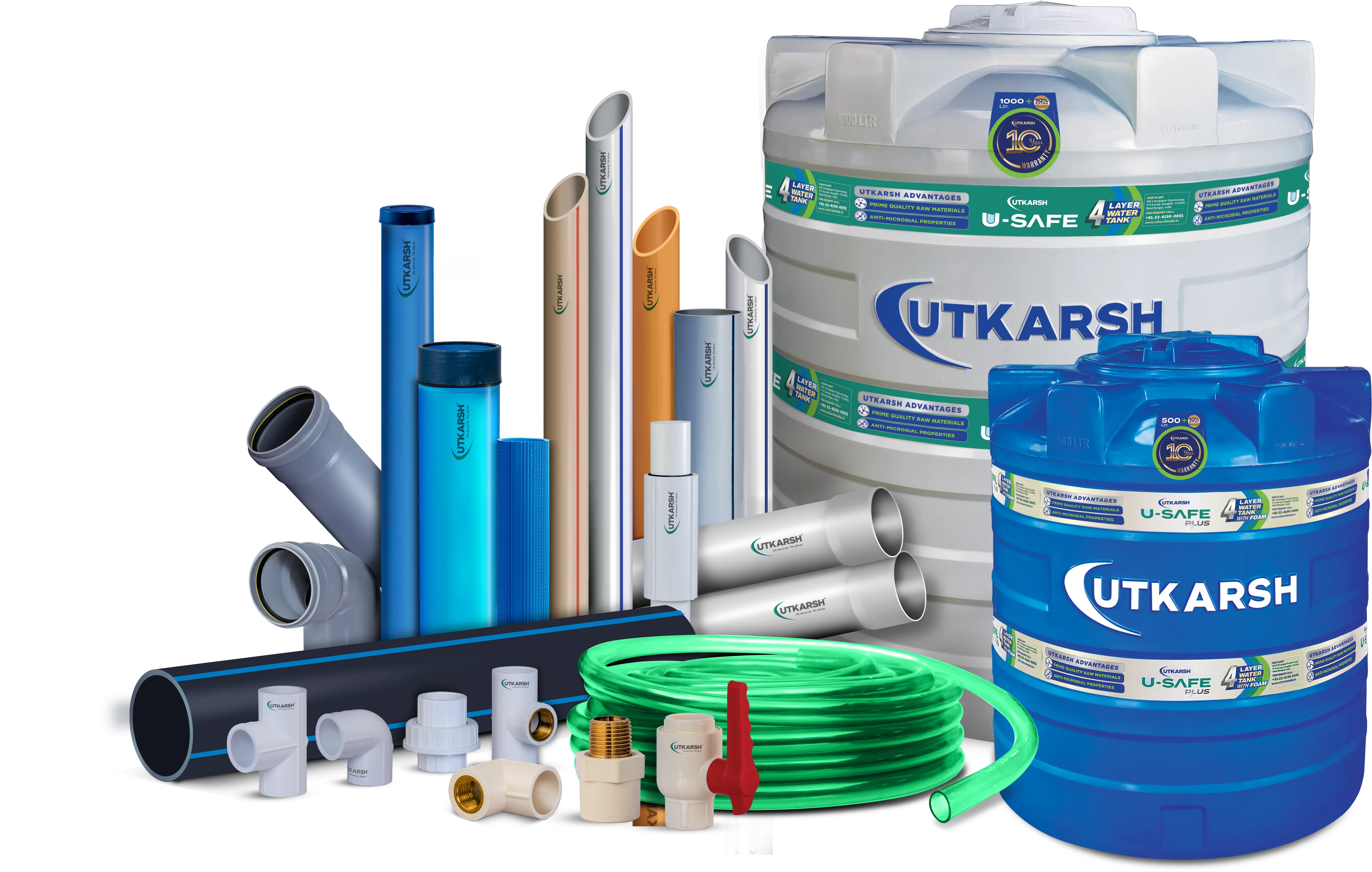
Utkarsh manufactures across the full spectrum of piping needs – uPVC, CPVC, PVC casing pipes, SWR pipes, borewell pipes, agriculture pressure pipes, HDPE pipes, and water tanks – so whether the requirement is a residential plumbing line or a deep borewell casing, there's a product built specifically for it rather than a one-size-fits-all pipe.
Manufacturing Built Around IS Standards
Utkarsh pipes are produced to meet relevant Indian Standards (IS:4985, IS:15778, IS:12818, IS:13592, and IS:14151, depending on the product), giving buyers a clear, checkable benchmark for quality rather than relying on brand claims alone.
Scale That Backs Up the Promise
Utkarsh runs 2 manufacturing plants with a combined annual capacity of around 68,000 metric tonnes, and works with a network of over 150,000 plumbing partners and 5,000+ dealers across India. That scale means consistent supply, even for large or time-sensitive projects.
Built on 5X Quality Checks
Every product is manufactured and tested against five core standards – durability, leak-proof performance, non-toxicity, pressure resistance, and overall strength – rather than relying on a single quality metric.
Recognised by the Industry
Utkarsh has received recognition from bodies including EEPC India and FIEO, along with other industry awards over the years, reflecting sustained performance rather than a one-off achievement.
Leadership With Deep Industry Roots
The company is led by Sunil Bansal and Utkarsh Bansal, based out of Kolkata, and has grown from a single manufacturing base into a nationally recognised pipe and fittings supplier.
FAQs
Is PVC pipe safe for drinking water?
Yes. PVC is chemically inert, meaning it doesn't react with water or leach harmful substances, which is why it's widely used for potable water supply lines.
How long do PVC pipes last?
With proper installation and normal operating conditions, PVC pipes typically last more than 50 years.
What is the difference between PVC and CPVC pipes?
CPVC is a modified version of PVC that can handle higher temperatures – up to around 93°C – making it suitable for hot water lines, while standard PVC/uPVC is generally used for cold water and drainage.
Can PVC pipes be used outdoors?
Yes, but UV-stabilised or specially treated pipes are recommended for long-term outdoor use, since prolonged sun exposure can affect untreated PVC over time.
Are PVC pipes recyclable?
Yes. PVC is a recyclable material, which makes it a more sustainable choice compared to piping materials that can't be reused at the end of their service life.
Wrapping Up
PVC pipes have transformed how water, waste, and industrial fluids are transported across homes, farms, and industries. From safe drinking water to reliable sewage networks, PVC pipe systems now play a role in almost every kind of infrastructure. But the real value of PVC doesn't come from the material alone – it comes from how well it's manufactured.
This is where Utkarsh Pipes stands out, offering a complete range of uPVC, CPVC, and PVC casing pipes, backed by rigorous quality control and decades of manufacturing experience. Utkarsh Pipes ensures that every product meets a high standard of safety, performance, and sustainability.
Contact Utkarsh Pipes today to find the right PVC solution for your project.