













Standards and Certifications for uPVC Pipes and Fittings in India
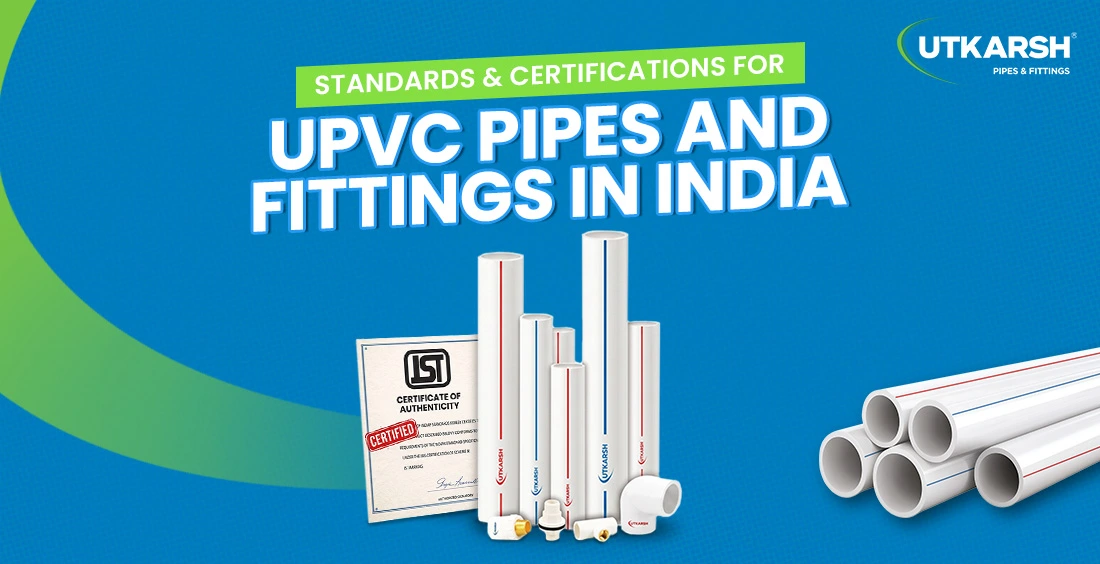
When planning plumbing for residential or commercial projects, the most critical question remains: Is uPVC pipe safe for drinking water? The answer is a resounding yes, provided the pipes meet specific safety and quality benchmarks. Unplasticized Polyvinyl Chloride (uPVC) is favored globally for being non-toxic, lead-free, and chemically resilient. However, not all pipes are manufactured to the same standard. To ensure water safety and system longevity, it is essential to understand the uPVC pipe standards and uPVC pipe certifications that define a quality product.
Comprehending the Safety Compliance Standards of uPVC Pipes
Regulatory bodies establish rigorous uPVC pipes specifications to ensure materials are durable and safe for potable water. Here are the primary standards you should look for when selecting a supplier:
1. ISI Certification
In India, the ISI mark, issued by the Bureau of Indian Standards (BIS), serves as the most recognized symbol of product quality and compliance. For uPVC plumbing systems, ISI compliance certification confirms that the product has been tested and verified for:
Accurate dimensions and wall thickness
High material strength
Pressure-handling capability
Temperature resistance
Long-term durability
Hygienic safety for potable water applications
For builders, contractors, and infrastructure developers, choosing ISI-certified uPVC pipes ensures dependable performance under varying operating conditions.
2. BIS Certification
In India, the Bureau of Indian Standards (BIS) is the hallmark of quality. A certified uPVC pipe manufacturer must adhere to:
IS 4985: This standard covers uPVC pipes meant for potable water supplies. It guarantees the absence of harmful heavy metals like lead and cadmium.
IS 15778: While focused on CPVC, this is the standard for pipes used in both hot and cold water distribution systems.
3. ASTM Standard:
uPVC Pipes
Size Range: Push-in pipe size 20 mm – 50 mm
Standard: ASTM D 1785 Schedule 40 & 80
uPVC Fittings
Size Range: Threaded & Push-in 20 mm – 50 mm
Standard: ASTM D 2467 Schedule 80
4. ISO 4422
The ISO 4422 certification confirms that the pipes meet international performance and safety requirements. This is a key credential for upvc pipe fittings manufacturers who operate in global markets.
How to Ensure You’re Buying Safe uPVC Pipes?
To guarantee the health of your plumbing system, follow these selection tips:
Verify Certifications: Always check for BIS, ISO, or NSF markings directly on the pipe surface.
Insist on Lead-Free: Ensure the pipes are explicitly labeled as "lead-free" to avoid heavy metal contamination over time.
Check Material Integrity: Premium uPVC should be tasteless and odorless, indicating no chemical leaching.
Prioritize UV Stability: For outdoor installations, choose UV-stabilized pipes to prevent brittleness and degradation from sun exposure.
When you choose Utkarsh Pipes, you are choosing:
100% Lead-Free Assurance: We eliminate the risk of heavy metal contamination, making our pipes the safest choice for potable water.
Advanced UV-Stabilization: Our pipes don't just last; they thrive under the sun, resisting brittleness and cracking even in extreme heat.
Global Quality Benchmarks: With rigorous adherence to BIS, ISI, ISO, and NSF standards, we bring international engineering to your doorstep.
Zero Maintenance, Maximum Durability: High chemical resistance and leak-proof joints mean you can install it and forget it.
Check Out for More Details: uPVC Pipe Safety Standards - Regulations & Certifications
The Bottom Line
Choosing the right pipes is an investment in your health. By verifying uPVC pipe standards and opting for a certified pipe manufacturing company, like Utkarsh Pipes and Fittings, you ensure a clean and durable water supply for years to come.
Don't compromise on quality - choose lead-free, certified, and UV-stabilized solutions for your next project.
Explore Utkarsh Pipes & Fittings Full Range of Certified uPVC Solutions Today!
Frequently Asked Questions
1. Are uPVC pipes safe for carrying drinking water?
Yes, uPVC pipes are safe for drinking water, provided they are lead-free and certified by authorities like BIS (IS 4985) or NSF.
2. What does the BIS certification signify for uPVC pipes?
BIS certification ensures the pipe has passed rigorous government tests for strength, pressure tolerance, and non-toxicity (ensuring no harmful chemicals leach into the water).
3. Why should I choose lead-free uPVC pipes?
Lead is a toxic heavy metal. Lead-free pipes ensure that your water remains pure and free from heavy metal contamination, which can occur if lower-quality stabilizers are used.
4. Can uPVC pipes be used for hot water?
Standard uPVC is best suited for cold water applications. For hot water systems, CPVC (Chlorinated Polyvinyl Chloride) is the recommended choice due to its higher temperature resistance.