













The Importance of ISI-Compliant uPVC Pipes and Fittings
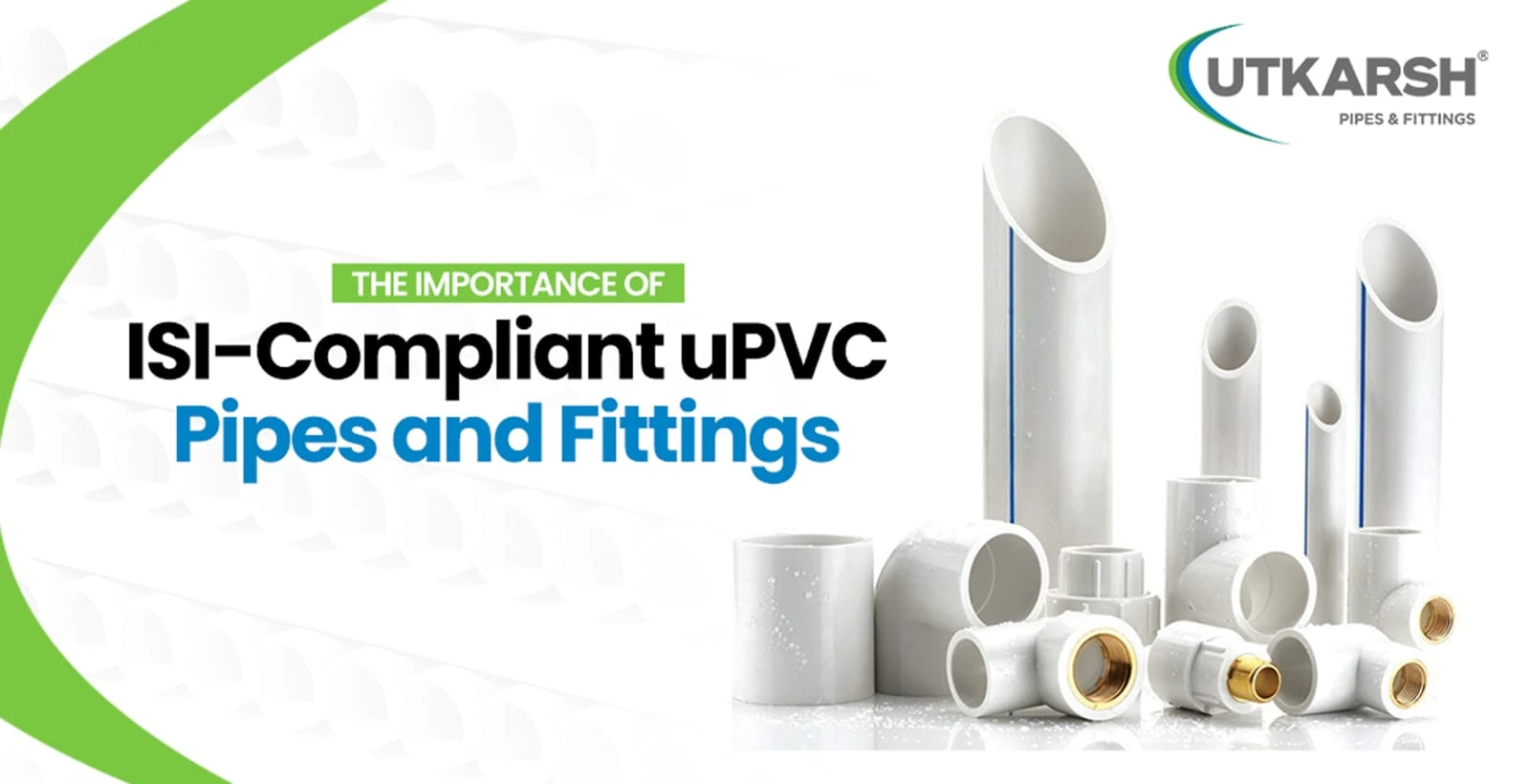
In plumbing and water distribution systems, compliance is not optional - it is critical. When it comes to UPVC pipe standards, choosing ISI-certified products ensures safety, durability, and long-term performance. For residential, commercial, and industrial applications, high-quality uPVC pipes and fittings play a vital role in delivering reliable water supply without leakage, contamination, or premature failure.
As one of the leading upvc pipe fittings manufacturers, Utkarsh Pipes and Fittings follows strict national and international standards to ensure performance, safety, and structural integrity.
What Does ISI Compliance Mean for uPVC Pipes?
ISI compliance refers to products certified under Indian Standards, ensuring they meet stringent quality benchmarks defined by the Bureau of Indian Standards (BIS). For plumbing systems, this certification confirms:
Accurate dimensions and wall thickness
High material strength
Pressure-handling capacity
Temperature resistance
Long-term durability
Hygienic safety for potable water
For uPVC plumbing pipes, adherence to ISI standards guarantees reliability under varying operating conditions.
Technical Specifications of Utkarsh uPVC Pipes and Fittings
When discussing reliable plumbing systems, understanding the technical specifications of Utkarsh uPVC pipes and fittings is essential. Designed to deliver durability, safety, and consistent performance, these pipes and fittings are produced using advanced uPVC manufacturing techniques while complying with globally recognised standards and modern quality control processes.
Utkarsh Pipes ensures that every uPVC product meets strict manufacturing parameters, making them suitable for residential, commercial, and industrial water distribution systems.
Technical Overview
Also Read: uPVC Pipe Safety Standards - Regulations & Certifications
Key Performance Features of ISI-Compliant Pipes
Choosing certified uPVC pipes and fittings ensures superior reliability, durability, and performance in modern plumbing systems. These pipes are engineered with advanced materials and manufacturing processes that help them perform efficiently under varied operating conditions.
1. Lightweight & Easy Installation
The lightweight construction of uPVC plumbing pipes makes handling and installation quick and efficient. Installers can transport and position pipes easily, reducing manual effort and overall labor costs. This design also enables faster installation, making the plumbing process more convenient and hassle-free for both residential and commercial projects.
2. Chemical & Corrosion Resistance
ISI-compliant pipes are highly resistant to aggressive chemicals, corrosion, and environmental exposure. Unlike conventional metal pipes that may rust or deteriorate over time, uPVC pipes maintain structural integrity even in challenging conditions. This corrosion-free nature significantly increases their service life and reduces maintenance requirements.
3. UV Resistance
Special formulations are used in the manufacturing process to protect pipes from ultraviolet radiation. This protection helps prevent surface degradation, color fading, and long-term brittleness that can occur due to continuous sun exposure. As a result, the pipes maintain strength and durability even in outdoor installations.
4. Hygienic & Safe
uPVC plumbing systems are designed to be hygienic and safe for potable water supply. The material is bacteria-resistant and prevents the buildup of scaling inside the pipe walls. This ensures that water remains clean and uncontaminated while flowing through the plumbing network.
5. Impact Resistance
The robust construction of uPVC pipes and fittings provides strong resistance to physical impacts. This durability helps prevent breakage during transportation, handling, and installation. The improved mechanical strength also ensures long-term performance in demanding plumbing applications.
Six-Stage Quality Assurance
Quality is verified through a rigorous 6-stage testing process, ensuring:
Dimensional accuracy
Pressure testing
Temperature performance validation
Material strength verification
Chemical resistance testing
Final inspection before dispatch
This systematic testing ensures strict compliance with uPVC pipe standards and international benchmarks.
Why ISI Compliance Matters in Plumbing Systems
Non-certified pipes can result in:
Leakage and joint failures
Pressure burst risks
Contamination of water
Reduced lifespan
Higher maintenance costs
On the other hand, ISI-compliant uPVC plumbing pipes provide:
Assured performance
Long operational life
Structural stability
Regulatory compliance
Peace of mind
For builders, contractors, architects, and homeowners, choosing certified products is a long-term investment in infrastructure safety.
Applications of ISI-Compliant uPVC Pipes and Fittings
These systems are widely used in:
Residential plumbing
Commercial complexes
Industrial process water systems
Potable water distribution networks
Because of their corrosion resistance, smooth flow characteristics, and durability, uPVC pipes outperform many traditional piping materials in water distribution systems.
Final Note
Utkarsh Pipes is compliant with BIS (ISI) standards along with ASTM D 1785 and ASTM D 2467 manufacturing specifications ensures that every pipe and fitting meets defined benchmarks for strength, pressure capacity, and durability.
As one of the trusted upvc pipe fittings manufacturers, Utkarsh Pipes and Fittings combines premium raw materials, advanced manufacturing processes, and multi-stage quality testing to deliver reliable piping systems for modern infrastructure.
When selecting plumbing solutions, always prioritize certified products that align with established uPVC pipe standards - because quality today ensures safety for years to come.
FAQs:
1. What are uPVC pipe standards in India?
uPVC pipe standards in India are defined by BIS certifications such as IS 15778, ensuring safety, durability, and performance reliability.
2. Why are ISI-compliant uPVC pipes important?
ISI-compliant pipes ensure pressure resistance, temperature tolerance, hygienic safety, and long-term durability.
3. Are uPVC plumbing pipes suitable for hot water?
Standard uPVC pipes are generally for cold water, while CPVC pipes are designed to withstand higher temperatures up to 90°C.
4. What certifications should I check before buying uPVC pipes and fittings?
Look for ISI marking and compliance with standards like ASTM D 1785; 2467 for assured quality and performance.