














Best Pipes for Plumbing: Why uPVC is a Preferred Option in India
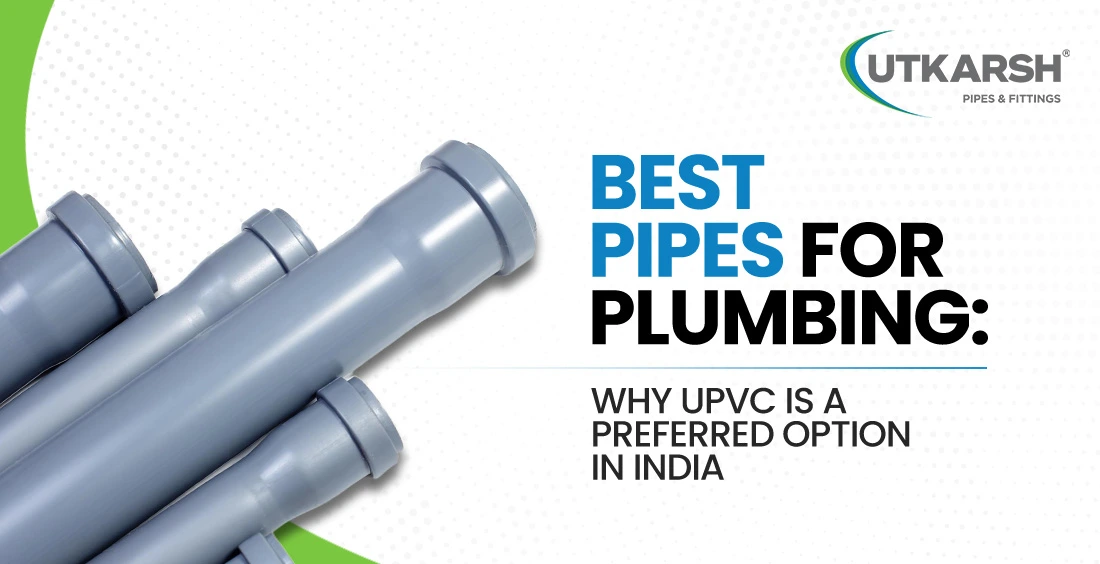
India’s piping infrastructure is witnessing a major shift, fueled by rapid urban growth, expanding infrastructure demands, and nationwide water supply initiatives driving next-generation piping solutions. Identifying the best pipes for plumbing is no longer just a technical decision; it directly impacts durability, water quality, and long-term cost efficiency.
Out of available options, uPVC plumbing pipes have emerged as a dominant solution across residential, commercial, and infrastructure projects. This article provides a comprehensive analysis of Indian plumbing requirements, climatic challenges, and why uPVC stands out as the best plumbing pipes in India - with a strategic focus on performance, compliance, and scalability.
Understanding India’s Plumbing Infrastructure Landscape
India’s plumbing ecosystem has evolved significantly over the last few decades. Traditional materials like galvanized iron (GI) and metal pipes have been largely replaced by modern plastic-based alternatives due to corrosion and maintenance issues.
Key Drivers of Demand
Urbanization & Real Estate Growth
The housing sector remains the largest consumer of plumbing systems, with increasing demand for durable and low-maintenance piping solutions.
Shift Toward Plastic Pipes
Materials like PVC, CPVC, and uPVC are rapidly replacing metal pipes due to:
Corrosion resistance
Lower lifecycle cost
Ease of installation
Infrastructure Expansion
Massive pipeline networks are required for water supply, drainage, irrigation, and sanitation across urban and rural India.
Government Initiatives Driving Pipe Demand in India
India’s infrastructure push has created unprecedented demand for high-quality pipes.
1. Jal Jeevan Mission (JJM)
Target: Provide tap water to 19.4 crore rural households
Budget: ₹8.69 lakh crore under JJM 2.0
Coverage increased from 17% (2019) to over 81%
This mission alone requires thousands of kilometers of pipeline networks, making reliable materials like uPVC essential.
2. Smart Cities Mission
Urban infrastructure upgrades require efficient plumbing for:
Water distribution
Sewage systems
Stormwater drainage
3. PMAY (Housing for All)
Affordable housing projects demand cost-effective and durable plumbing materials.
4. PMKSY (Irrigation Projects)
uPVC pipes are widely used in agriculture due to their ability to handle pressure and resist environmental stress.
Indian Climate & Its Impact on Plumbing Systems
India’s diverse climate conditions demand highly resilient piping systems.
Key Challenges
Extreme Temperatures:From sub-zero Himalayan regions to 45°C+ heat in central India
High Humidity & Coastal Conditions: Accelerates corrosion in metal pipes
Soil Variability: Chemical exposure in underground installations
Water Quality Issues: Hard water leads to scaling in traditional pipes
Why Material Selection Matters
Thermal Stability
Thermal stability ensures pipes can handle temperature fluctuations without deformation. In India’s extreme heat, uPVC plumbing pipe maintains its shape and strength, preventing cracks and joint failures.
Corrosion Resistance
Corrosion resistance protects pipes from rust and chemical damage. Unlike metal, uPVC plumbing pipe does not react with water or soil, ensuring durability and safe water flow.
Leak-Proof Performance
Leak-proof performance reduces water loss and maintenance. uPVC plumbing pipe offers strong joints and smooth surfaces, ensuring consistent flow without leakage issues.
Long Service Life
Long service life ensures cost efficiency over time. uPVC plumbing pipe resists wear, scaling, and environmental stress, delivering reliable performance for decades.
Applications of uPVC Pipes
Residential plumbing
Commercial buildings
Underground drainage
Agricultural irrigation
Industrial piping systems
Why uPVC is the Best Pipe for Plumbing in India
1. Superior Durability & Longevity
uPVC pipes are resistant to corrosion, rust, and chemical degradation - ensuring long service life even in harsh environments.
2. Excellent Climate Resistance
They withstand:
High temperatures
UV exposure
Moisture and humidity
This makes them ideal for India’s diverse climatic zones.
3. Leak-Proof & Low Maintenance
Smooth internal surface prevents scaling
Strong joints reduce leakage risks
Minimal maintenance over time
4. Safe for Potable Water
uPVC pipes are non-toxic and non-reactive, ensuring safe water transportation.
5. Cost-Effective Solution
Lower installation costs
Reduced maintenance expenses
Longer lifecycle = better ROI
6. Lightweight & Easy Installation
Compared to metal pipes, uPVC is easier to transport and install, reducing project timelines.
7. Eco-Friendly & Sustainable
Recyclable material
Energy-efficient manufacturing
Supports green building initiatives
Also Read: How UPVC Pipes Contribute to Sustainable Water Management
Choosing the Right uPVC Pipe Manufacturer
While uPVC offers multiple advantages, the performance of the system ultimately depends on the quality of manufacturing. Selecting a reliable uPVC pipe manufacturer ensures that the pipes meet industry standards, deliver consistent performance, and comply with regulatory requirements.
Key considerations include adherence to BIS standards, and Importance of ISI-Compliant uPVC use of advanced manufacturing technology, and the ability to cater to diverse application needs. A strong distribution network and proven experience in infrastructure projects further indicate reliability and product excellence.
Why Choose Utkarsh Pipes & Fittings
Utkarsh Pipes & Fittings stands as a trusted provider of high-performance uPVC solutions tailored for India’s evolving infrastructure needs. With a strong focus on precision engineering and quality control, the brand delivers products that meet the demands of both modern construction and large-scale government projects.
Their uPVC piping systems are designed to offer durability, leak-proof performance, and long service life, making them suitable for residential, commercial, and infrastructure applications. By combining advanced manufacturing capabilities with high-grade raw materials, Utkarsh ensures consistent quality and reliability across its product range.
Conclusion
India’s plumbing sector is at the core of its infrastructure transformation, with increasing emphasis on efficiency, sustainability, and long-term performance. In this evolving landscape, choosing the best pipes for plumbing is essential for ensuring reliable water distribution systems.
With their superior durability, resistance to environmental challenges, and compatibility with large-scale government initiatives, uPVC plumbing pipe solutions have become the preferred choice across the country. As demand continues to grow, uPVC remains a future-ready material that supports both infrastructure development and sustainable progress..
FAQs
1. Which is the best pipe for plumbing in India?
uPVC pipes are widely considered the best due to their durability, corrosion resistance, and low maintenance requirements.
2. Why is uPVC plumbing pipe preferred in India?
It performs well in diverse climates, is cost-effective, and ensures safe water flow without corrosion or leakage.
3. Are uPVC pipes suitable for government water supply projects?
Yes, they are extensively used in projects like Jal Jeevan Mission due to their durability and efficiency.
4. How long do uPVC pipes last?
uPVC pipes can last over 50 years under normal operating conditions.
5. Are uPVC pipes safe for drinking water?
Yes, they are non-toxic and suitable for potable water applications.
6. What makes uPVC different from traditional pipes?
Unlike metal pipes, uPVC does not rust, scale, or degrade easily, ensuring longer performance.
7. How do climate conditions affect plumbing pipes in India?
Extreme heat, humidity, and soil conditions can damage traditional pipes, while uPVC remains stable.
8. How to choose a reliable uPVC pipe manufacturer?
Look for certified manufacturers with proven quality standards, advanced technology, and strong market presence.